

Written October 18th, 2021
William Wells Brown was born an enslaved person in the southern parts of the United States near the start of the 19th century. He was one of the lucky few who was able to escape from this living hell to a freer life in the north of said country, and rather than try to pretend his youth never happened, Brown dedicated the rest of his life to the struggle for the destruction of the institution of slavery.
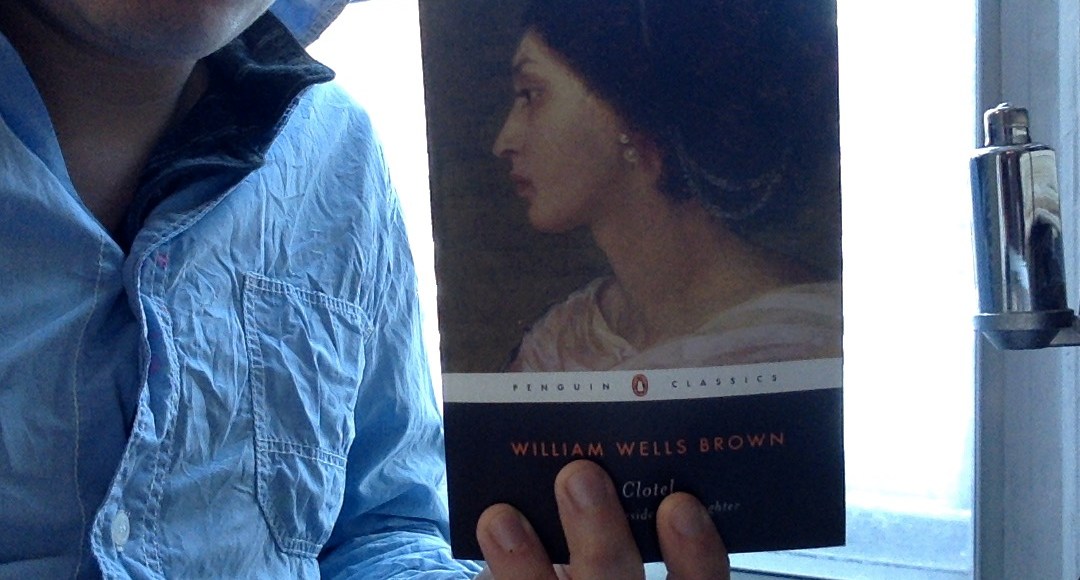
He was an autodidact who, despite no formal schooling at all, became a great intellectual: a memoirist, essayist, lecturer and novelist. This book, Clotel, or the President’s Daughter was his first novel, and – according to M. Giulia Fabi’s 2004 introduction to this Penguin Classics edition – it was possibly the first long form work of prose fiction (i.e. first novel) published by an “African American”.
After spending a long time lecturing and writing in the “Free States” of the US, for the majority of his adult life, Brown spent about a decade of his middle age living in Europe, during the period when the law in even the “free” parts of America changed to such a point that, essentially, any person who was Black – or perceived to be Black – could legally be kidnapped as a “fugitive slave” and transported to the South where they could then be enslaved for life, and though the end of the Civil War (and thus slavery) came less than 20 years after this law was introduced, a day enslaved is too long, and lifespans of enslaved people were, understandably, short, and twenty years is a big chunk out of anyone’s life. Horrors upon horrors upon horrors.
With the choices remaining to Brown as a prominent, Black, anti-slavery activist limited to a) risking enslavement in a supposedly “free” state, b) moving to Canada or c) heading over to Europe, he knew there was only one viable option. It was over there (I almost typed “over here”, how I wish I wish I wish) in Europe that he wrote his first work of fiction, which was marketed as written by “William Wells Brown, Fugitive Slave”, and it was published in 1853. The novel was reissued in slightly different versions (often with the names of the principal characters changed) over the course of Wells’ life, and mainly these edits were to alter (or obscure) the targets of Brown’s political ire.
The version included in this edition is the very first one, though it is followed by excerpts from later rewrites and features (sometimes excessively) detailed annotations explaining what these differences were and why they (may have) happened.
The original version directly named Thomas Jefferson as the slaveowner who had sex with the enslaved people he held prisoner on his lands, and the father of the eponymous protagonist, however these references – and the subtitle – were dropped when the novel received mass acclaim and huge sales. This acclaim and popularity was rightly deserved – Clotel is an incredibly powerful text, constructed in a near-postmodern collage of digressive narratives, encompassing excerpts from poems and songs and other works by contemporary Black writers and prominent white abolitionists, as well as references to the wider European literary tradition, which Wells isn’t brash to align himself with.
The title gives a premise and thus the narrative, and though I have read several recent fictional evocations of the appalling inhumane treatment of enslaved Black people (e.g. novels by Lawrence Hill, Octavia Butler, Colson Whitehead, Esi Edugyan), reading a fictionalised version of that narrative written by someone who had lived it is a very different experience.
The Narrator of this novel states in asides that some of the things he recounts are transpositions and adaptations of his lived experience, and there is a pleasingly-lengthy third person biography that opens the novel and clarifies in detail the real life inspiration for many of the events about to befall the text’s characters.
These events as recounted in the novel didn’t happen exactly as described – it is fiction – but things horribly similar to them did. And similar things happened and continued to happen as Brown wrote and rewrote his novel.
These cruelties and inhumane injustices had happened to Brown, to his friends and his family, as well as to millions of people he never met, and they would go on happening exactly the same way for decades after Clotel was first published, and then – in the century and a half since, due to the American establishment’s deliberate continued failure to properly legislate adequate reparations for one of humanity’s greatest acts of evil – there still remain serious, troubling and continually deadly racial divisions in the USA and around the world.
Some things have changed since 1853.
But not enough.

Thank you so much for reading TriumphoftheNow.com! If you like what you’ve read, please subscribe, share and order one of my books. If you love what you’ve read, why not order me something frivolous and noisy from this Amazon wishlist or make a quick donation via my ko-fi page?
I’m currently focusing on parenting and creative practice, so small donations are appreciated now more than ever!
scott manley hadley aka SOLID BALD live
Here’s a video of me recently performing at the prestigious (it has a Wikipedia page) comedy night, Quantum Leopard. Listen to how much fun the crowd is having. You could have that much fun, too!
Forthcoming gigs include the following – there may/will be others:
17th March 2026, 7pm: Slap & Giggle @ Coin Laundry, Clerkenwell
24th March 2026, 7.30pm: Lolipops, Southwark
26th March 2026, 7.30pm: Comedy @ Cosmic, Plymouth
9th April 2026, 7pm: Sunset Comedy, Chalk Farm
15th April 2026, time tbd: BALD PERSONALITY DISORDER 40min-ish WIP at Shirker’s Rest, New Cross (more details soon!)
27th June 2026: Twinkles Cabaret, London
9th August – 14th August: BALD PERSONALITY DISORDER at The Street, Edinburgh, part of PBH’s Free Fringe
Discover more from Triumph Of The Now
Subscribe to get the latest posts sent to your email.

 Triumph Of The Now
0 comments on “Clotel or, the President’s Daughter by William Wells Brown”