

Irene was silent, seeing in her mother’s face some hint of that central glory; seeing also the fearful fact that all the glory can happen and be done with by the age of twenty-two, and one can live for twenty, thirty, fifty years after that, work and marry and bear children and all the rest, without any particular reason to do so, without desire. / I am the daughter of a ghost, Irene thought. (p. 74)
For many people, though probably for far more people than those who admit to it, “home” doesn’t bluntly translate to the place and the people where one was born and/or (a term I don’t like) “raised”.
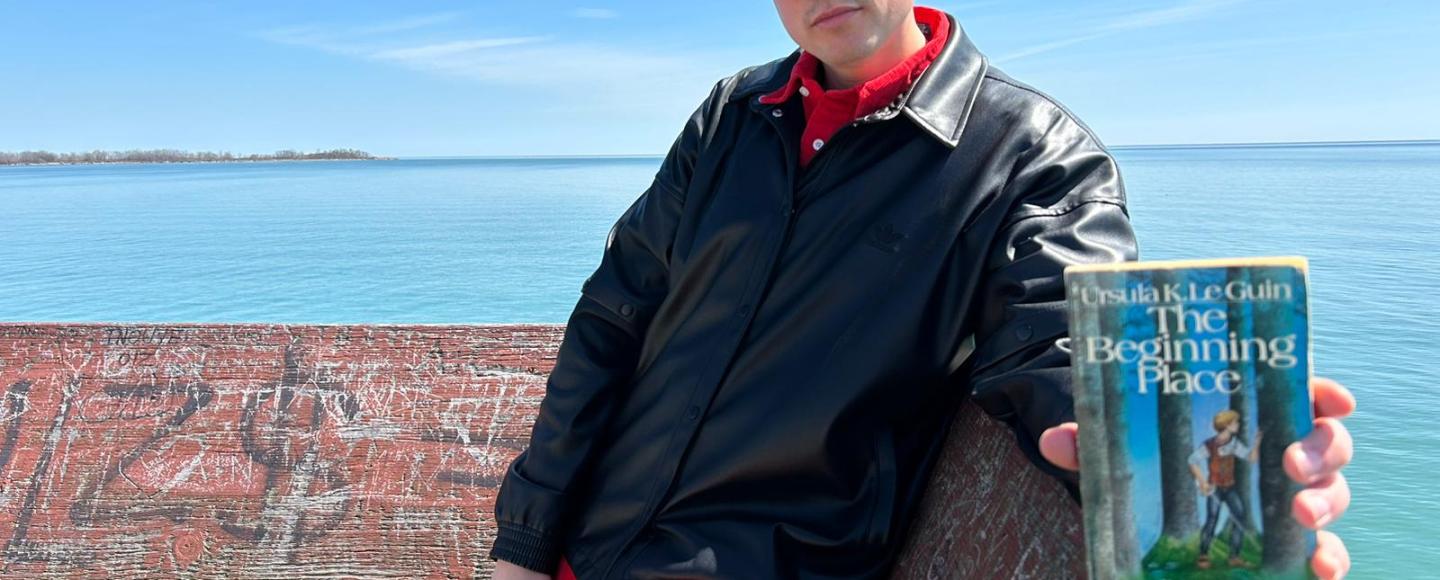
This mid-career (or very late early career) “standalone novel” (i.e. neither Earthsea nor Hainish Cycle etc) from Ursula K. Le Guin is a 1979 (I think, WiFi is ropey in Pearson Airport so I can’t check right now) coming-of-age type narrative about two depressed directionless young adults somewhere in the interior of the United States in the late twentieth century who both, independently, stumble onto a portal to another world.
Both are victims of familial neglect, a lack of education and an absence of opportunity, with the boy one (Hugh) suffering from a directly abusive and manipulative single mother (the daddy ran away) who has no interest in him at all, and the girl one (Irene) bereaved young (her daddy died) and then “raised” by her distant mother and a stepfather who definitively sexually harassed her and probably sexually abused her (Le Guin’s third person narrator – i.e. essentially Irene in her memorialising – is intentionally vague on the details)…
Neither are unhoused, but both lack a “home”.
They both have pretty much nothing going on in their lives, so when they (separately) find a path round the back of a nearby industrial estate that – instead of leading to a dead end of chain link fencing and fly-tipped fridges – leads through a shady woodland passage into a beautiful world of perpetual twilight filled with streams passing the most delicious and filling water they have ever encountered, they both believe they have maybe found somewhere they can live…
Cross the water and follow the gentle road uphill for most of a day’s walk, and you’ll arrive at a small mountain village in the foothills, with its inn always ready with a filling meal, friendly locals (several of whom are fucking drop dead gorgeous) and a thriving wool and weaving business that produces the items that are traded with people from even deeper into this country who grow the wheat and the meat animals and all the other things needed for the mountainous people and their wool flocks…
It’s a blissful, medieval, sustainable present, a place where time barely passes (compared to the “real world” of supermarkets and rental accommodation and flatmates and cars), but the people who live there can no longer move more than a couple of hundred metres from their houses… they cannot leave the village and it seems that nobody may enter it except for the two who come from “our” world.
There is an evil loose in their world, and it keeps people from trading and keeps people from moving. The woman from our world has been visiting this mountain village for years and knows their language and their customs and their ways. The male is new, yet they believe he should be able to free them from the evil that plagues their world…
Does he? And does Irene’s understanding of the local language facilitate his doing so? And is the way to free the world simple or sinister???
To answer those questions would be to distract from the real thematic messaging of the novel, which is a rather blunt, clear, and melancholic one about the ways in which people who have nothing leap towards those who also run away…
Yes.
Is there a happy ending? There’s a happier ending than the beginning, but in no way is this a simplistic happy ending where the good and well and the bad end badly….
This is emotive, serious, engaging and evocative work, similar to other things one will have encountered, yet it is a distinctly unique readerly experience.
Like most Le Guin books that I read these days, highly highly recommended…

Thank you so much for reading TriumphoftheNow.com! If you like what you’ve read, please subscribe, share and order one of my books. If you love what you’ve read, why not order me something frivolous and noisy from this Amazon wishlist or make a quick donation via my ko-fi page?
I’m currently focusing on parenting and creative practice, so small donations are appreciated now more than ever!
scott manley hadley aka SOLID BALD live
Here’s a video of me recently performing at the prestigious (it has a Wikipedia page) comedy night, Quantum Leopard. Listen to how much fun the crowd is having. You could have that much fun, too!
Forthcoming gigs include the following – there may/will be others:
17th March 2026, 7pm: Slap & Giggle @ Coin Laundry, Clerkenwell
24th March 2026, 7.30pm: Lolipops, Southwark
26th March 2026, 7.30pm: Comedy @ Cosmic, Plymouth
9th April 2026, 7pm: Sunset Comedy, Chalk Farm
15th April 2026, time tbd: BALD PERSONALITY DISORDER 40min-ish WIP at Shirker’s Rest, New Cross (more details soon!)
27th June 2026: Twinkles Cabaret, London
9th August – 14th August: BALD PERSONALITY DISORDER at The Street, Edinburgh, part of PBH’s Free Fringe
Discover more from Triumph Of The Now
Subscribe to get the latest posts sent to your email.

 Triumph Of The Now
Good post.
LikeLike
“Walking through the portal” books are a dime a dozen, but if you think it’s good, I’ll take your word for it, Scott. Another W.T.T.P. book is “A Man Rides Through,” and there is S.M. Stirling’s “Conquistador” book about a man passing through a radio-caused teleportation rift to a California that never saw the touch of a white man’s hand … Have you read any of these?
LikeLike
Pingback: Writing Beer, Drinking Poetry by Gwil James Thomas – Triumph Of The Now