


Inarguably, at his best, James Baldwin was probably one of the best to ever do it.
And at his worst – which Tell Me How Long The Train’s Been Gone (1968) arguably is – his writing was still fucking spectacular.
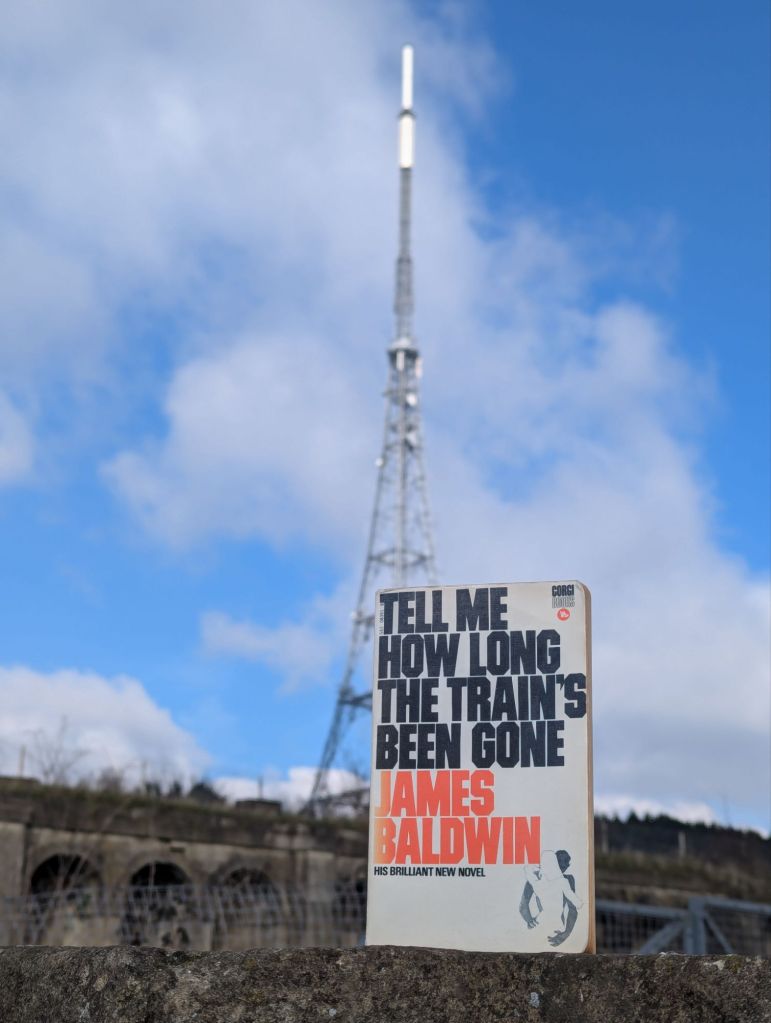
This long-feeling, flawed novel is split into three sections, each of which explores a significant relationship in the life of a hugely successful Black actor as he reflects on his life to date, following a heart attack in the vicinity of his 40th birthday.
The first section explores his romantic, incestuous, relationship with his older brother (which Baldwin writes in a way that is both saccharine and in very bad taste), while the second section deals with the beginning of his acting career and the formation of a long-term friendship (that occasionally bubbles into romantic affection) with a white woman named Barbara, who is also a successful (and Academy Award-winning) actor, while the third section (where the novel does kiiiiiinda come together, but not quite in a way that forgives and excuses the flaws elsewhere), looks at a newer, fresher, relationship with a younger Black Panther- adjacent activist, which leaves pleasing and responsible ambiguities at the text’s end.
There are many passages in this book that do, sadly, feel like parts of Baldwin’s political essays and public speeches cut up and put into dialogue form between other characters. Yes, sadly, there are conversations in here that do feel more like Socratic Dialogue (making a philosophical point) than narrative fiction…
This is the exact kind of (propagandistic?) misstep in literature that Baldwin’s famous essay – which I mention quite a lot on this website – ‘Everybody’s Protest Novel‘ is explicitly written in response to.
Using literature as scaffolding to hang a political point was something young James Baldwin abhorred, but mid-career James Baldwin definitely didn’t avoid doing…
Obviously, of course, these speeches and this speechifying is beautiful and is powerful and is potent; Baldwin was, of course, a gifted orator, but this does mean that there are sections of this novel – particularly in the first half – that do feel like they really need a bit of an edit.
BUT – it’s still James Baldwin. So it never becomes shit.
–///–
Yes, at its least engaging, Tell Me How Long The Train’s Been Gone does feel like a remix of “The Best Of Baldwin”, with phrases, ideas, and conversations that feel very familiar to someone (like me) who has read the majority of Baldwin’s published work and listened to a lot of the recordings of his speeches and debates…
In some ways, this one did remind me of the last book he published in his lifetime, The Evidence Of Things Not Seen, which was the only book-length non-fiction text of his conspicuously not included by Toni Morrison (as editor) in the Library Of America edition of his [otherwise] collected non-fiction…
While that book is so short that there isn’t space for a readerly redemption by its end, Tell Me How Long The Train’s Been Gone has enough of a page count to recapture narrative energy, and transform back into the kind of emotionally potent and literally significant piece of writing that one would normally associate with Jimmy. In short, by the end of this I cared a lot about its characters. But it took me a while to get there…
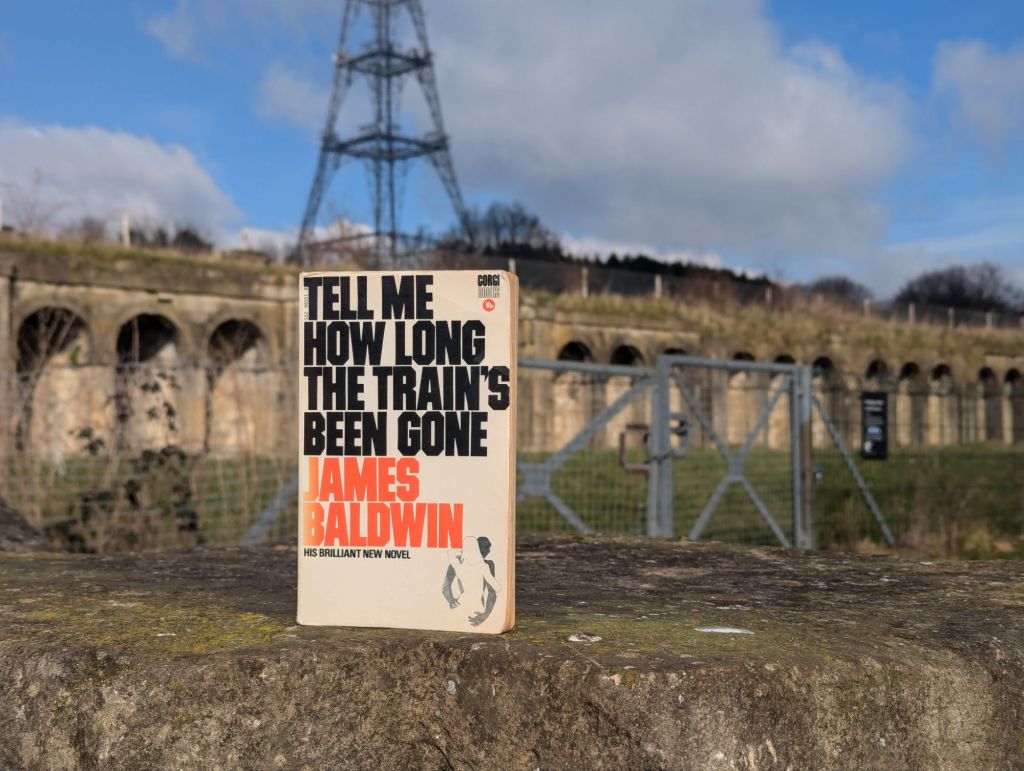
–///–
Where Tell Me How Long The Train’s Been Gone really excels is, essentially, in monologues.
The bits of this novel that are most exciting are when other characters tell their life stories – often in flashbacks within flashbacks within flashbacks – to Leo Proudhammer, the narrator and protagonist.
What this basically means is that there could have been an excellent collection of shorter stories culled from the text of this manuscript, with the speechifying cut out (or at least reduced).
Overall, what feels most clear about this novel is that, in 1968, Baldwin was too big to be edited, and though a beautiful, flawless novel could have been created from the text that’s in here, the version as published isn’t that.
And all of the above comments don’t mean that by the end of this novel I wasn’t frequently weeping, yearning in heart and soul for joys and happiness for these characters, particularly Leo himself and for Christopher, his younger lover at the end of the book.
There is a beautiful, human, deeply emotive, deeply evocative love story here in the book’s final (and shortest) section, and maybe the flawed elements of the novel that precede this are necessary to get the reader into a position where one cares enough about Leo Proudhammer to be so moved by the potential for happiness and joy in his life… Then again, maybe the book would have been more enjoyable and potent had this novel been finessed just a little more.
–///–
There’s beautiful prose here, evocative description and imagery, and the political sections remain as articulate and important as one would hope to find from Baldwin. They just aren’t consistent in the scenes and characters’ voices where they appear…
It’s a messy, flawed novel, yes, and definitely the least enjoyable of Baldwin’s longer form fiction that I’ve read, but it is still entertaining, intelligent, meaningful, and moving, and that a novel can be both heartbreakingly disappointing, and one of the best things I’ve read all year, speaks deeply to Baldwin’s talent, energy, and brilliance.
If you haven’t read Baldwin, you really should.
–///–
Below is an extended quotation of a long paragraph from the final hundred pages of the novel. Rash, brash, evocative, urgent (in a good way). Baldwin Baldwin Baldwin Baldwin.
Here they came: the nice blonde girl from Minneapolis, who lived in the Village with her black musician husband. Eventually, he went mad and she turned into a lush. I don’t know what happened to their little boy. Here they came: Rhoda and Sam, the happiest young couple in the Village. She committed suicide, and he vanished into Spain. Here they came: two girls who worked in advertising and who lived together in fear and trembling, who told me all about their lives one drunken night. One of them found a psychiatrist, married a very fat boy in advertising, and moved to California and they are now very successful and vocal Fascists. I don’t know what happened to the other girl. Here they came: the black man from Kentucky, who called himself an African prince and had some ridiculous name, like Omar, and his trembling Bryn Mawr girl friend, whose virginity he wore like a flag. Her family eventually had him arrested, and the girl married somebody from Yale. Here they came, the brilliant, ageing Negro lawyer who lived on whisky and benzedrine and fat white women; here they came, the bright-eyed boy from the South, who was going to be a writer and who turned into a wino; here they came, the boy who had just fled from his rich family in Florida ant who was going to live a different life to theirs (‘I don’t need all that money, I just want to be me’) and who turned into a junkie; here they came, the faggot painter and his Lesbian wife, who had an understanding with each other which mad them brutally cruel to all their playmates and which welded them, hatefully, to each other; here they came, the lost lonely man who worked in the shipyards and lived with his mother, who loved young boys and feared them and who jumped off a roof; here they came, the nice, middle-aged couple everyone was always glad to see, the husband of which couple, weeping and sweating, once threw me down among the garbage cans and tried to blow me – ‘Don’t tell Marcia. Please don’t tell my wife!’ – here they came, the beautiful girl who painted and who ended up in Bellevue; here they came, the beautiful girl who was going to be a dancer and who ended up in prison; here they came, the brilliant Boston scion who liked to get fucked in the ass, and who threw himself before a subway train – which chopped off his head – here they came, my God, the wretched, the beautiful, lost and lonely, trying to live, though death’s icy mark was on them, trying to speak, though they had learned no language, trying to love although the flesh was vile, hoping to find in all the cups they tasted, that taste which was joy, their joy, without which no life is worth living. Yes, I learned a lot. They frightened me, but I learned a lot. Here, one night, came Sally, with whom I was to live for nearly two years, very cool and sleek and distant, with two white, male NYU students. They were talking sociology, I thought they were full of shit, and eventually I said so, and Sally and I had a fight. Then, I haunted the NYU campus until I found her again and I made her speak to me again, like a person this time, and not like a poor relation, the object of sociological research. Here, one night, came Steve, from Pennsylvania, the wayward son of a famous general, and he fell in love with me. I have to put it that way because that’s what happened, although I know I didn’t handle it very well. But he meant a lot to me and he taught me something very valuable, a certain humility before the brutal and mysterious facts of life. Sally eventually married a Negro lawyer, a very nice man, and we’re still friendly – I guess we cost each other enough for that. Steve went off to Tangier, and I am told that he is drinking himself to death there. Yes. My days of anger. [p. 317 – 319]
I flagged a second, similar, paragraph from even later in the book to potentially include here, but I think one does the job.
If it’s not your thing, fair enough. But it very much is mine!
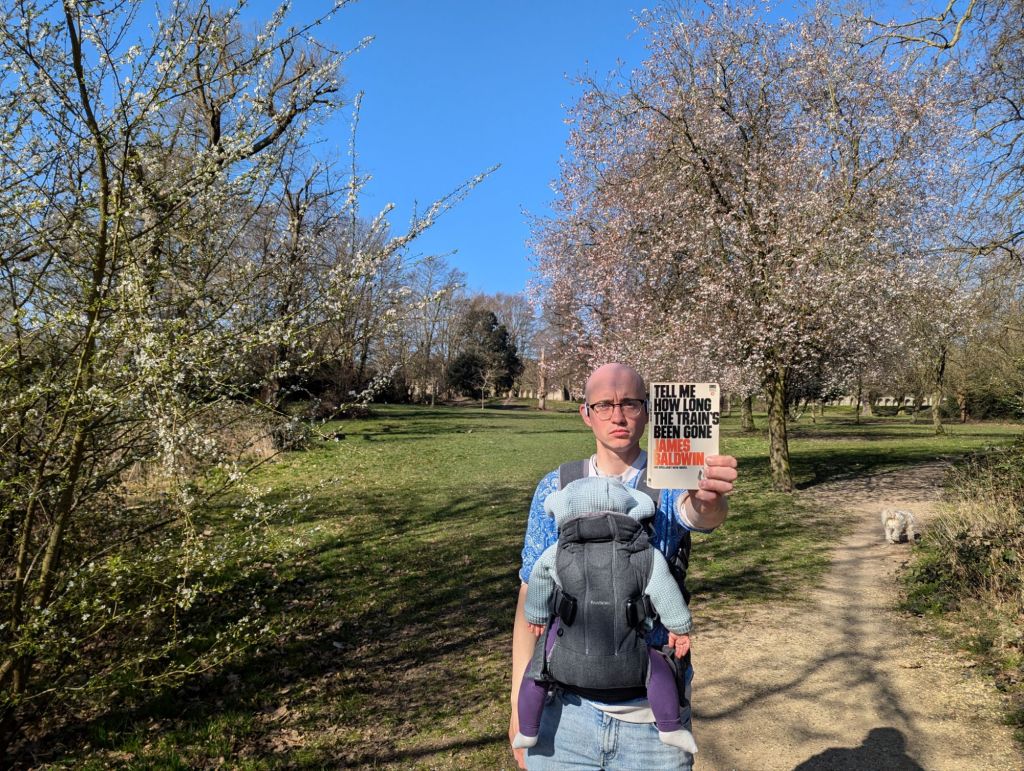

Thank you so much for reading TriumphoftheNow.com! If you like what you’ve read, please subscribe, share and order one of my books. If you love what you’ve read, why not order me something frivolous and noisy from this Amazon wishlist or make a quick donation via my ko-fi page?
I’m currently focusing on parenting and creative practice, so small donations are appreciated now more than ever!
scott manley hadley aka SOLID BALD live
Here’s a video of me recently performing at the prestigious (it has a Wikipedia page) comedy night, Quantum Leopard. Listen to how much fun the crowd is having. You could have that much fun, too!
Forthcoming gigs include the following – there may/will be others:
17th March 2026, 7pm: Slap & Giggle @ Coin Laundry, Clerkenwell
24th March 2026, 7.30pm: Lolipops, Southwark
26th March 2026, 7.30pm: Comedy @ Cosmic, Plymouth
9th April 2026, 7pm: Sunset Comedy, Chalk Farm
15th April 2026, time tbd: BALD PERSONALITY DISORDER 40min-ish WIP at Shirker’s Rest, New Cross (more details soon!)
27th June 2026: Twinkles Cabaret, London
9th August – 14th August: BALD PERSONALITY DISORDER at The Street, Edinburgh, part of PBH’s Free Fringe
Discover more from Triumph Of The Now
Subscribe to get the latest posts sent to your email.

 Triumph Of The Now
0 comments on “Tell Me How Long The Train’s Been Gone by James Baldwin”