
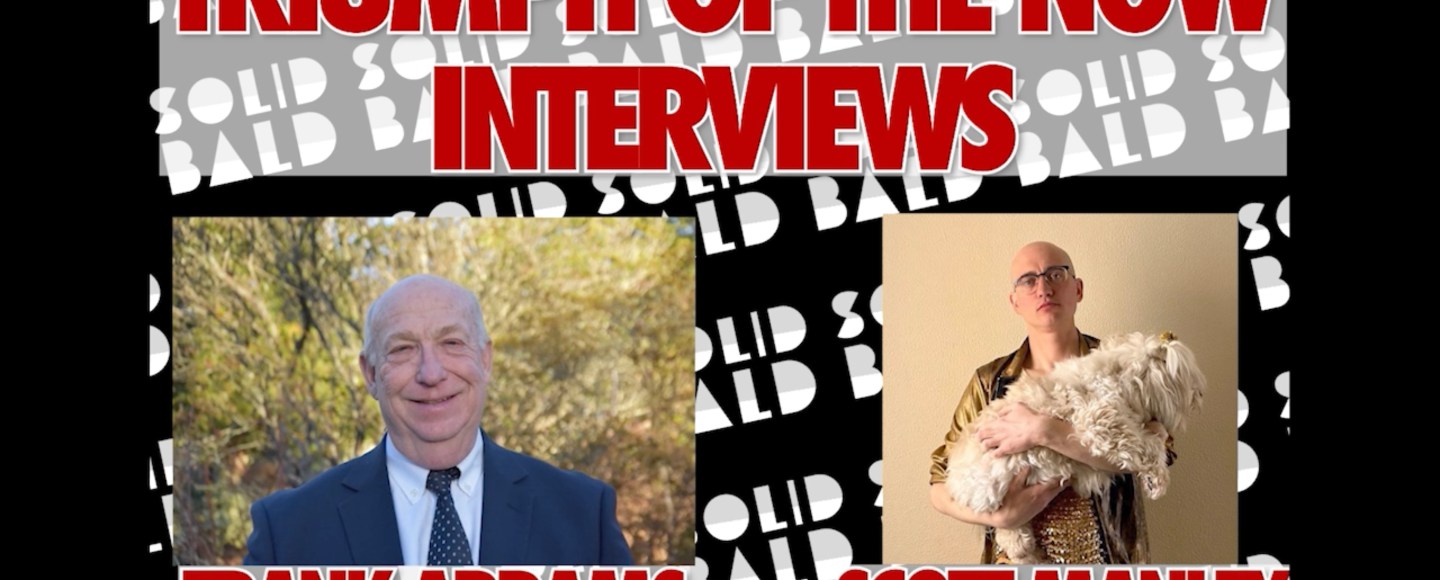

please find below a TriumphOfTheNow.com peek behind the curtain – the notes, quotations, excerpts and ideas I collated prior to interviewing Frank Abrams, author of The Cockfight.
For more info on that book, check out the main interview (Episode 1) of yet another new web series, Triumph Of The Now Interviews. More episodes coming soon!
Topics/ideas/questions/queries to cover (not necessarily in this order):
- Please introduce yourself and describe your book as if to someone unfamiliar with it.
- Why fiction?
- As opposed to memoir/case study/long form deep dive on a real case?
- How close to real life stories are the tragedies included within here:
- E.g. scientists lying under oath re: DNA evidence
- Flathead’s false charges of criminal conspiracy
- Julia Tuttle Sex Offenders Colony
- Would you ever write book-length non-fiction or memoirs about real life cases you’ve worked on? (Or would the need to de-personalise details for confidentiality make this a non-starter?)
- The Cockfight opens with a very violent scene that emphasises the brutality and danger – though also the community – of the characters living unhoused and off-the-radar in Miami. Why did you choose to start the novel with such a BIG action scene?
- There are several scenes that take place at cockfights in the novel and all of these – especially the first time – are very evocative and memorable. Is this something you’ve experienced in real life or is it all imagination?
- I really like the structure of the novel – lots of short chapters, each quite episodic and moving the story on. It’s very easy to pick up the book and breeze through the narrative. How much time did you spend planning/plotting the novel? What was your process?
- (((A writing process I’ve read about before that always interests/daunts me was that Hemingway claimed that whenever he wrote a novel, he would write from start to finish and every single day he would begin by reading through and editing what he had written so far. A daunting process!)))
- I had no idea about the founder/inventor of the DeLorean being involved in drug trafficking! I just knew those cars as the vehicle with strange doors in Back To the Future!
- “But with powerful Southern politicians, they managed to place a prison in that small town. These prisons bring in jobs and revive the economy[. T]here are more prisoners in America today than there are farmers and all of these small towns clamor for placement of these prisons to bring in jobs and federal money.” (p. 65) –
- How much does this continue to be true, and does it explain the high level of incarceration in the United States?
- Imprisoning people is a lucrative business – do you think this happened by design or accident? Is it likely to change?
- After discussing an injustice – “”But ain’t North Carolina in the bible belt, Preach?” asked Amos, “Ain’t they supposed to be Christians?” “Oh, don’t you see,” replied Preach, “many of those bible belt folks pray like Chrisitians, but sin like the devil.””
- Touching on ideas of forgiveness and sin:
- Why do you think forgiveness – which is lauded as a virtue in so much of the world – often fails to be considered as part of legal systems?
- The book mentions, frequently, people who continue to be “punished” after being released from prison, especially economic/financial/empployment difficulties that are a direct result of having a criminal record. What do you think could be done differently to help people re-integrate into society after a period of imprisonment?
- Why do you think so many people are comfortable with the idea of “punishment” exceeding the prison term?
- Do you find people change their opinions on these topics the more they know about it (e.g. a friend/family member becomes a convicted felon?)
- In the UK, I can think of only one national company that proudly works with formerly incarcerated people, and in the sector I have worked in most frequently there is one London company that does this, and both of these companies often get teased/mocked/belittled for choosing to do this, despite rehabilitation and forgiveness being ideas that are broadly praised. Why do you think that some people seem to want to split society inton “good people” and “bad people”, despite all life experience teaching us that this is a long way from the truth!?
- People can do terrible things within the law and face little to no consequences (e.g. predatory gambling/short term high interest loan companies, etc), people can get away with crimes and other people can have – as The Cockfight explores – their lives ruined by one-off mistakes or even false accusations. Perhaps wanting to have black and white ideas of the world is a defence mechanism against having to accept the injustices of our society!
- Until over halfway through the novel the only lawyers/attorneys mentioned are all responsible for (at best) permitting miscarriages of justice or (at worst) actively perpetuating them. A recurring theme is that they often advocate for their clients to take plea deals rather than fighting against charges they claim are false. How commonplace is this? And why do you think this happens? Ease? Cynicism? Lawyers not believing their clients are innocent?
- In the preface to your novel, you write how – in contravention to legal technicalities – “the operative assumption is that once charged, always guilty.” This is something that happens here in the UK, too, with mugshots of suspects in high profile cases printed in newspapers long before trials take place. Similar to ideas mentioned earlier, why do you think people are so keen to see suspects as perpetrators from the off?
- Do you think this has any link to the long-term popularity of crime/detective fiction and movies/TV shows, which mostly end with the arrest and the detective’s certainty?
- In your professional experience, how different from real life are these depictions of criminal investigations?
- Generally speaking, are detectives more likely to want an answer or the truth? Or does that vary hugely from person to person and/or between police departments?
- “What happened was that they offered me a plea to a misdemeanor for the two charges but there was a deadline, and in order to take the plea I would have to have had the money to pay my court appointed lawyer. I couldn’t raise the money, so they indicted me for the two felonies.” p. 109.
- Is this still a real situation that can happen in North Carolina? A suspect can be refused better treatment – even if offered – if they’re unable to pay for a lawyer to oversee a conversation? What’s the justification for this practice?
- P. 114: “In order to find a Defendant guilty of engaging in a continuing criminal enterprise, the government does not have to proe that all five or more people operated together at the same time, or that the defendant knew all of them.”
- What is the justification for this and how could a conspiracy operate without its members in communication with each other?
- P. 118 – “They punish you twice, first for violating the federal law, then for prior convictions in state court.”
- How commonplace is this, people being punished twice for the same act?
- Is the thinking behind this that a person cannot perpetuate the same act travelling from state to state without an increase in severity of punishment (as may happen for repeat offenders in the same location)?
- Do you think there is an ethical justification for this?
- What kinds of criminal acts would this statute be applied to?
- In the central part of the book, the main characters all head to a library and learn about laws and injustices independently by doing research. Why did you choose to empower the characters in this way, rather than have them learn this information through (e.g.) a conversation with a sympathetic attorney?
- P. 127 – “their only interest in America is how much money they can line their pockets with.”
- How much do you think simple greed is responsible for the injustices discussed in this novel?
- How do you think we – as a global society – can try to deprogramme ourselves from this?
- It’s understandable to want “more”, but I think people like to forget that for this to happen, someone else must have “less”. Why are we encouraged to believe that this equation doesn’t exist?
- There’s lots of emotion and lots of crying from the characters in the novel, especially as the consequences of injustice – or the opportunity for respite from iniquities – appear on the horizon. Why was it important for you to have characters exhibit their feelings/be in tune with their emotions?
- (Or am I just seeing this as note-worthy as a buttoned-up Brit?)
- We do get a sympathetic and hard-working attorney later in the novel who works to get Teach’s unfair convictions overturned (even though this does result, temporarily, in Teach being sent back to prison). He says (p. 223): It’s an unfair and unjust system in an unjust world […] That’s why I became an attorney […] thinking that I could make a difference.”
- Was this why you became an attorney?
- Have you been able to make a difference during your career?
- How difficult has this been?
- Late in the novel (p. 237) you discuss the use of cockfighting as a metaphor for the discussions of the prison system – being caged, people taking advantage, extracting money and (ultimately) expecting death before freedom…
- Why do you think metaphors and allegories are so often used in literature, especially writing that is seeking to make a stark point about our current world?
- In reality, how likely would someone in Teach’s position be to clear their name?
- How have you found travelling around to book signings? What’s it like meeting readers and potential readers?
- What feedback and comments have you got so far from people who’ve read The Cockfight?
- You seem to be quite the polymath, with lots of different interests! What would you say drives you?
- What do you think are the similarities between writing and making music? What are the differences?
- If you could change one thing to make life better for as many people as possible, what would it be?
- What are the most important things for you?
- What’s next? Are you working on another book?
- Would you like to read a passage from the book?
FRANK ABRAMS is a criminal defense attorney in both North Carolina and Florida. He has practiced federal and state criminal law during his entire 38-year career. He has appeared on public radio and Court TV. He is also an inventor, having a patent on a new type of banjo, and has been in the news for finding a tintype picture of Billy The Kid along with Pat Garrett, the man who killed him.
Connect with Frank Abrams here:
https://www.facebook.com/profile.php?id=61560773440817
Order The Cockfight from Amazon here:
https://www.amazon.com/Cockfight-Frank-Abrams/dp/B0DD5JNFC7
Order The Cockfight from Barnes & Noble here:
https://www.barnesandnoble.com/w/the-cockfight-frank-abrams/1146178454

Thank you so much for reading TriumphoftheNow.com! If you like what you’ve read, please subscribe, share and order one of my books. If you love what you’ve read, why not order me something frivolous and noisy from this Amazon wishlist or make a quick donation via my ko-fi page?
I’m currently focusing on parenting and creative practice, so small donations are appreciated now more than ever!
scott manley hadley aka SOLID BALD live
Here’s a video of me recently performing at the prestigious (it has a Wikipedia page) comedy night, Quantum Leopard. Listen to how much fun the crowd is having. You could have that much fun, too!
Forthcoming gigs include the following – there may/will be others:
17th March 2026, 7pm: Slap & Giggle @ Coin Laundry, Clerkenwell
24th March 2026, 7.30pm: Lolipops, Southwark
26th March 2026, 7.30pm: Comedy @ Cosmic, Plymouth
9th April 2026, 7pm: Sunset Comedy, Chalk Farm
15th April 2026, time tbd: BALD PERSONALITY DISORDER 40min-ish WIP at Shirker’s Rest, New Cross (more details soon!)
27th June 2026: Twinkles Cabaret, London
9th August – 14th August: BALD PERSONALITY DISORDER at The Street, Edinburgh, part of PBH’s Free Fringe
Discover more from Triumph Of The Now
Subscribe to get the latest posts sent to your email.

 Triumph Of The Now
0 comments on “notes for an interview with FRANK ABRAMS, author of THE COCKFIGHT”