
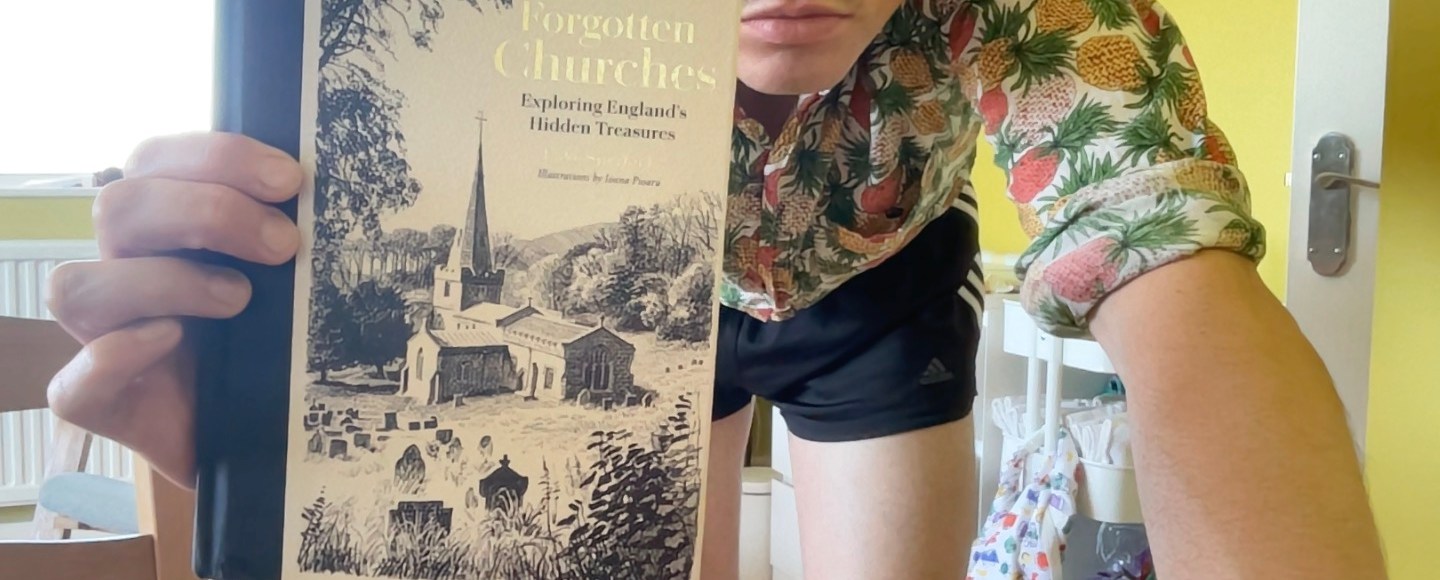

Forgotten Churches: Exploring England’s Hidden Treasures published by Frances Lincoln, 2025
Look, I’ll be honest… About a third of the way through reading Forgotten Churches: Exploring England’s Hidden Treasures, I started collating phrases from it that I was going to sneeringly quote here, mocking and making fun of the clearly deeply uncool1 Luke Sherlock, encouraging you – my loyal, generous and (if an email I once received from an author who was enraged by my failure to appreciate their genius in a post about their book is correct2) ignorant readers – to laugh uproariously at Sherlock’s provincial faux pas [plural], at the many ideas and phrases he uses here that just ain’t hip, yeah?
I have that list and I may dip into it later3, sure, but having read the rest of the book through, it no longer feels like something I want to do.
Because, yes, Luke Sherlock may not be cool, Luke Sherlock may not be trendy, Luke Sherlock may not be slick, but having now travelled the length and breadth (width) of the country4 with him, Luke Sherlock is now my dweeb, my nerd, and if anyone fucking laughed at him I’d… well, obviously, I wouldn’t do anything. But I wouldn’t be happy about it.
–///–
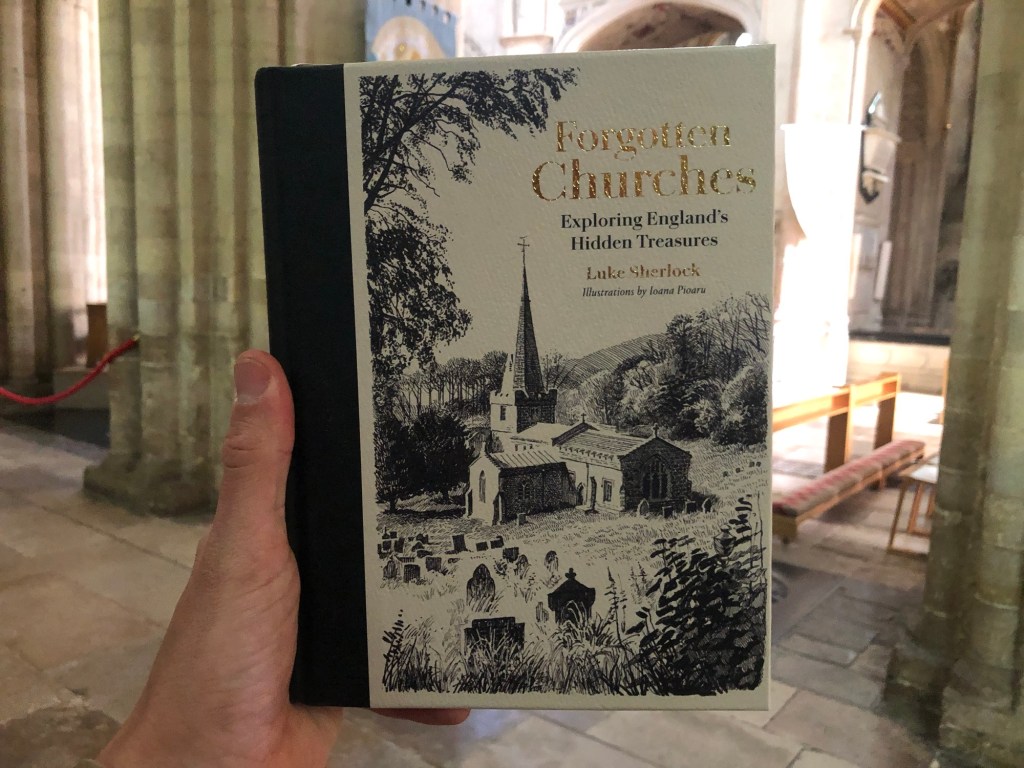
Forgotten Churches: Exploring England’s Hidden Treasures is a new book from Frances Lincoln Publishing, which features brief travelogues from Sherlock about his explorations of English churches, all accompanied by beautiful etching-style illustrations by Ioana Pioaru.
Not all of the churches are still functioning as places of worship, though the vast majority are.
Not all of them are architecturally interesting or unique, but most of them are. (Those that aren’t have been selected in order to demonstrate typicalities – versions and styles of construction and design that stand in for tens, hundreds, of other examples.)
Not all of them are in the countryside, not all of them are accessible by walk from a station, not all of them are in picturesque locations, and not all of them have secrets and stories tied to the great narratives of the nation, though many of them do…
Not all of these churches contain beautiful works of art or stunning examples of craftsmanship. Not all of them have been cared for, not all of them have been restored, not all of them have beautiful grounds or a thriving congregation or a continuing role as a central part of a community…
But all of them have something.
All of them have themselves, all of them have their own histories, and all of them function as focal points for the task and the habit that Sherlock has set himself – to explore the historic places of worship of the North Atlantic Archipelago.
–///–
The book is split into sections that are roughly tied to periods/styles of construction, though as architectural ideals and practices spread far more slowly in the centuries before mass media, there is (of course) plenty of overlap – the dates of the last Norman-style churches and first Gothic style churches are hard to parse, and the beginnings and ends of these styles segue into each other, especially as the project of building a church was very often a drawn out one (though not as drawn out as the production of, e.g. a Cathedral – even today those can take over a century!).
The trips and journeys made to visit these churches are usually described in quick but useful detail, with Sherlock sometimes offering a sentence or two about his varying day jobs to colour up this introductory passages. He did not – of course – visit these churches in the broadly chronological order of the descriptions in the book, and so the segments of his life do sometimes make him seem a little disordered, though in a very Millennial manner that would happen were I, too, to offer occasional autobiographical snippets in the context of a beautifully-presented coffee table book.
Although the broadly pro-Christianity and gently Royalist politics Sherlock exhibits in this text are likely to be initially off-putting to anyone who’s done any significant intellectual reckoning with the historic ideological causes that have led us to the disintegrating dystopia that is contemporary late (we hope!) capitalism, if you read this book as a whole – focusing on its discussions of community and place and architecture – these things stick out far less than they would do if you read one or two of the passages at a time.
In the context of a whole work, these politics fade into the background, though Sherlock’s confident presumption that these small c-conservative “pro-God” and centrality of the “Great Men of History” narratives type idea are shared with his readership is likely to be true – I do think that my gentle anarcho-politics are far from the norm in England…
So, yes, though Sherlock and I have divergent opinions on the sociocultural legacies of the Christian institutions that build and funded and organised them, I do fundamentally agree with his assertions that these historic buildings are important, are beautiful, and tell stories about England that are far beyond the ones we (certainly I) learned in school.
These churches – and the hundreds (thousands?) more not included in this book – contain examples of beautiful craftsmanship, of stunning natural resources – the wood and stone used for construction – and of legacies and histories of people and places…
Doors and fonts and windows and chairs and bells and floors and mosaics of beauty, scattered around the countryside and almost of them neglected by the wider world…
Forgotten, Sherlock’s title calls them, but given their presence in this book – a truly lovely object – they haven’t been forgotten by the writer, at least, and – one hopes – certainly a fair few of them will find themselves being remembered by locals and tourists who happen to have had a flick through Sherlock’s text.
There are a few churches mentioned in the book that are within London, and a few close enough to be a daytrip with a train and a walk (once this heatwave has abated a little!) that I intend to go and visit soon.
Do I have more respect for the institution of the Church after having read this? No.
But by the end the book I had changed my mind on Luke Sherlock – initially I dismissed him as a god-and-king-loving bumpkin5, but by the end of Forgotten Churches I had very much come around to the idea that his project – documenting visits to these architectural gems – was well worth his time, and well worth my time to read about it.
Informative, entertaining, educational, and with just a hint of pro-establishment bias: if this book isn’t adapted into a BBC series soon (whether presented by Sherlock or someone else), I’d be very surprised!
Enjoyable, beautiful – a great gift for anyone who likes exploring England and hates the English even just a tiny bit less than me.
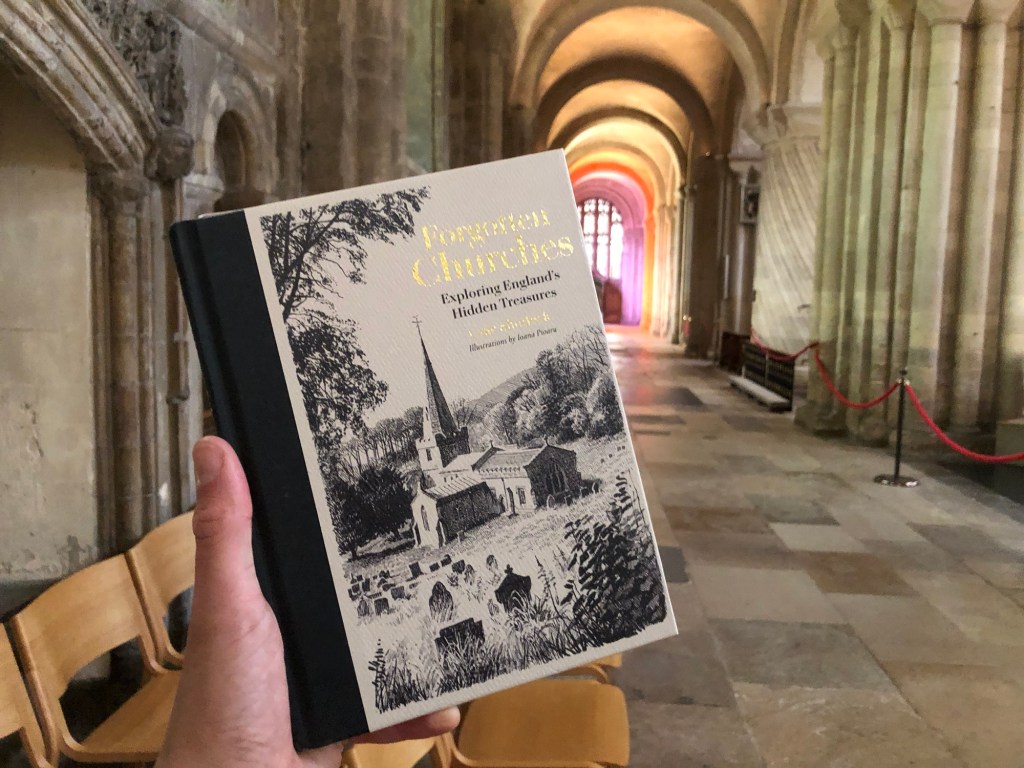
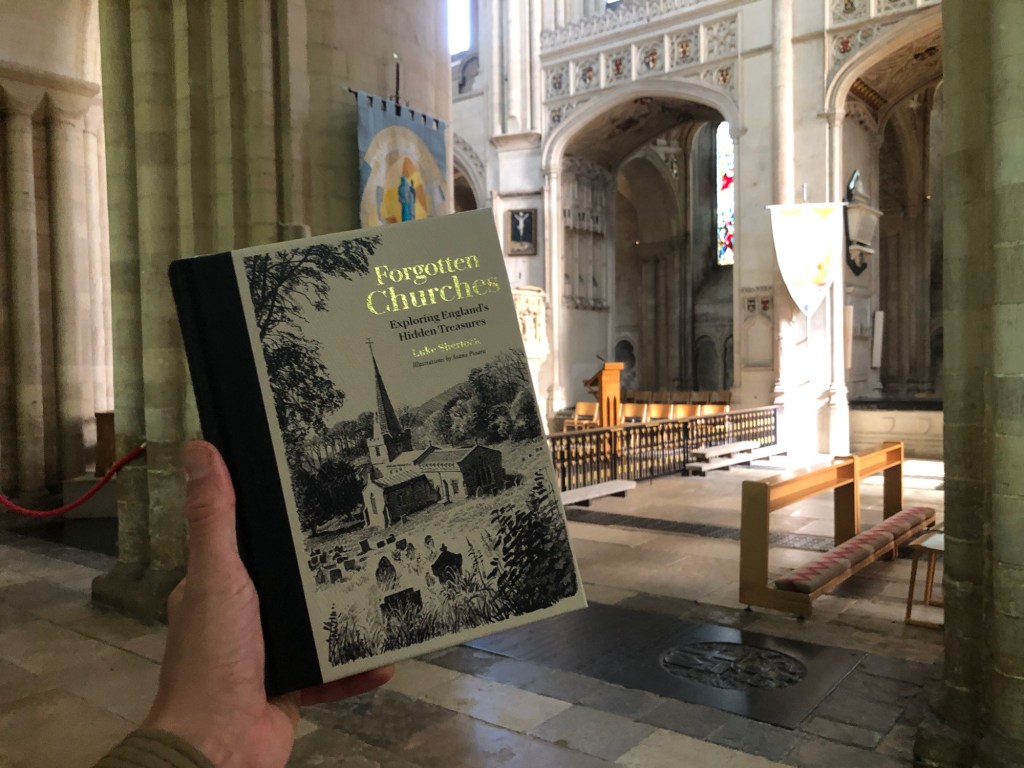
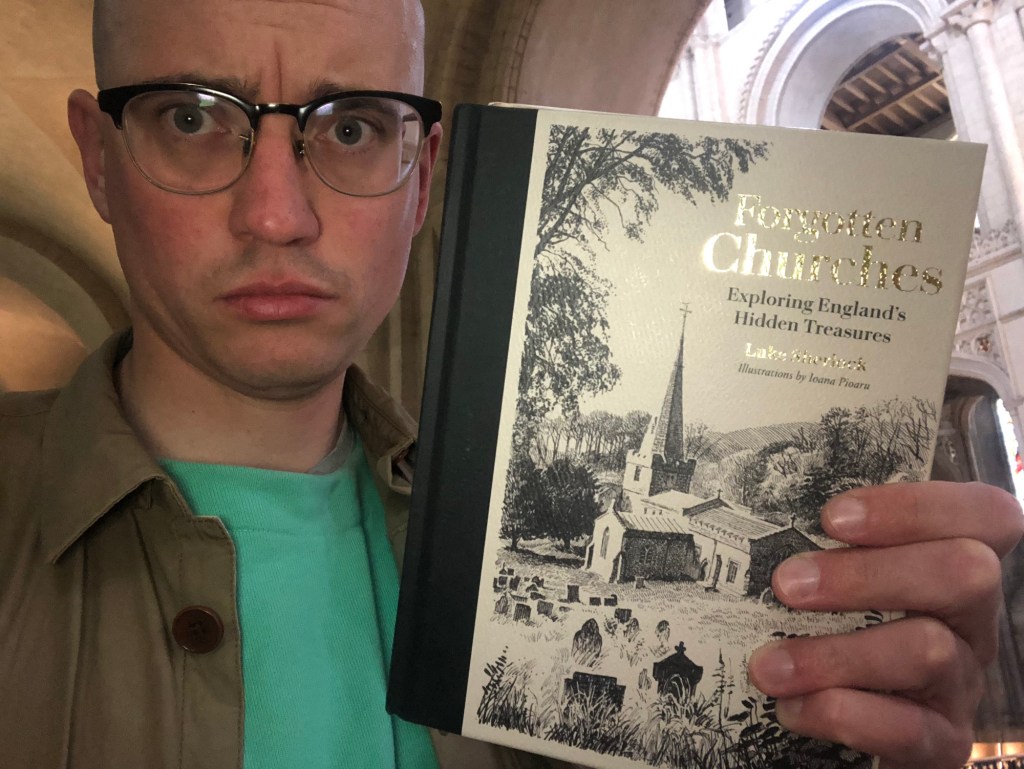
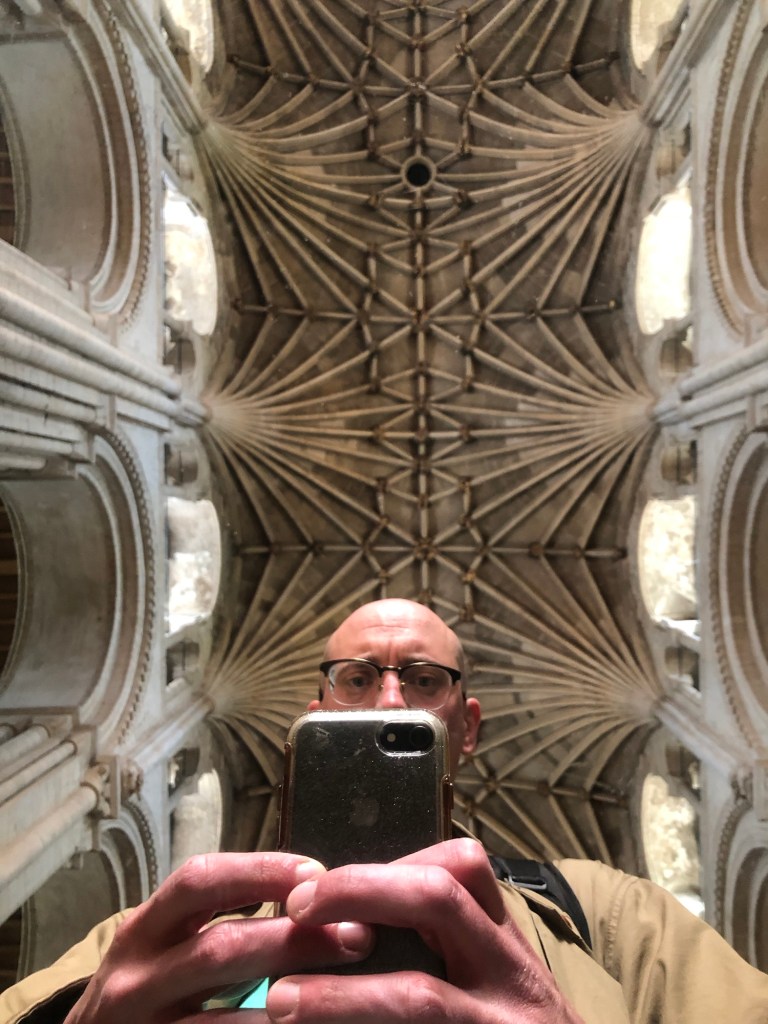
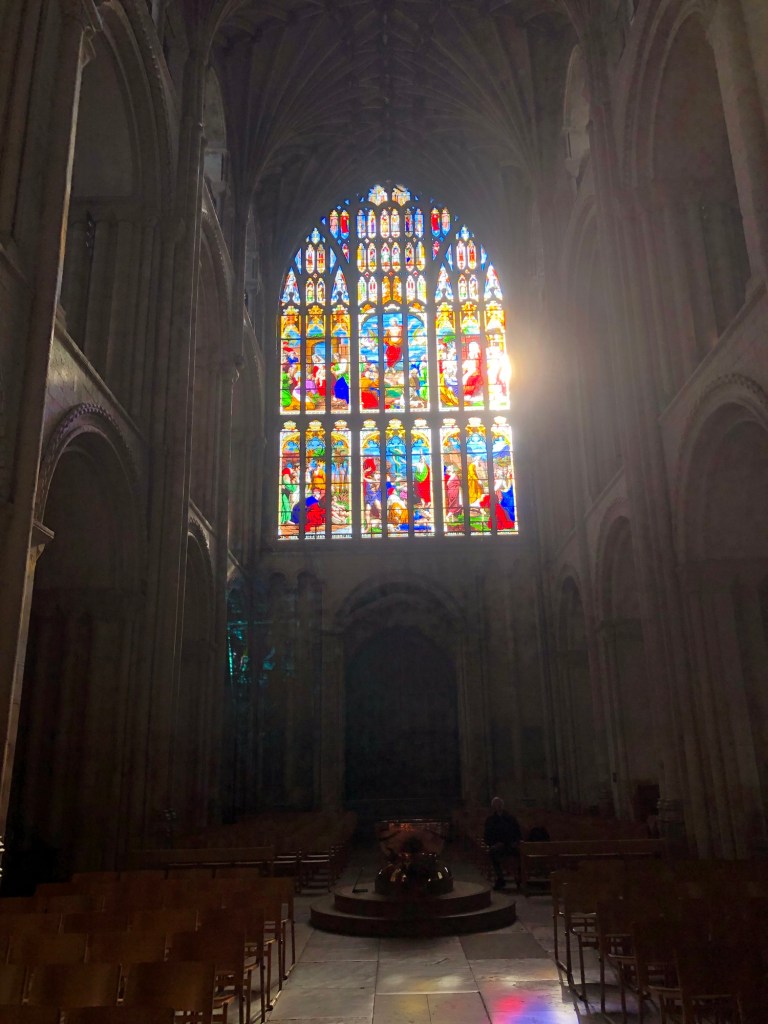
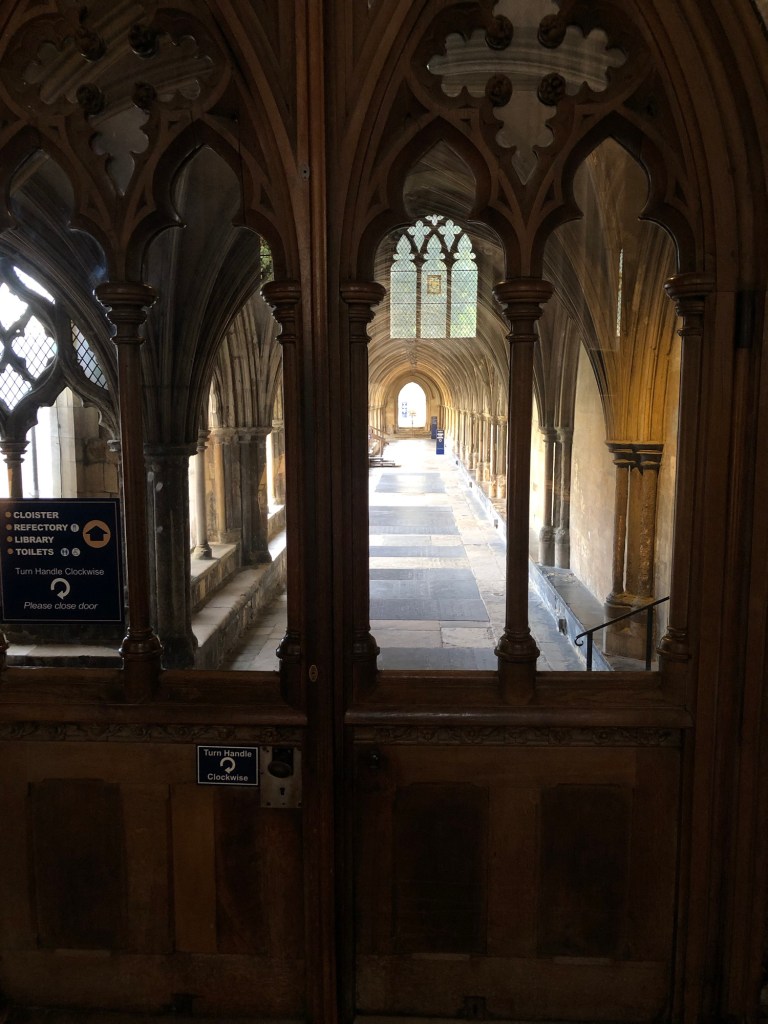
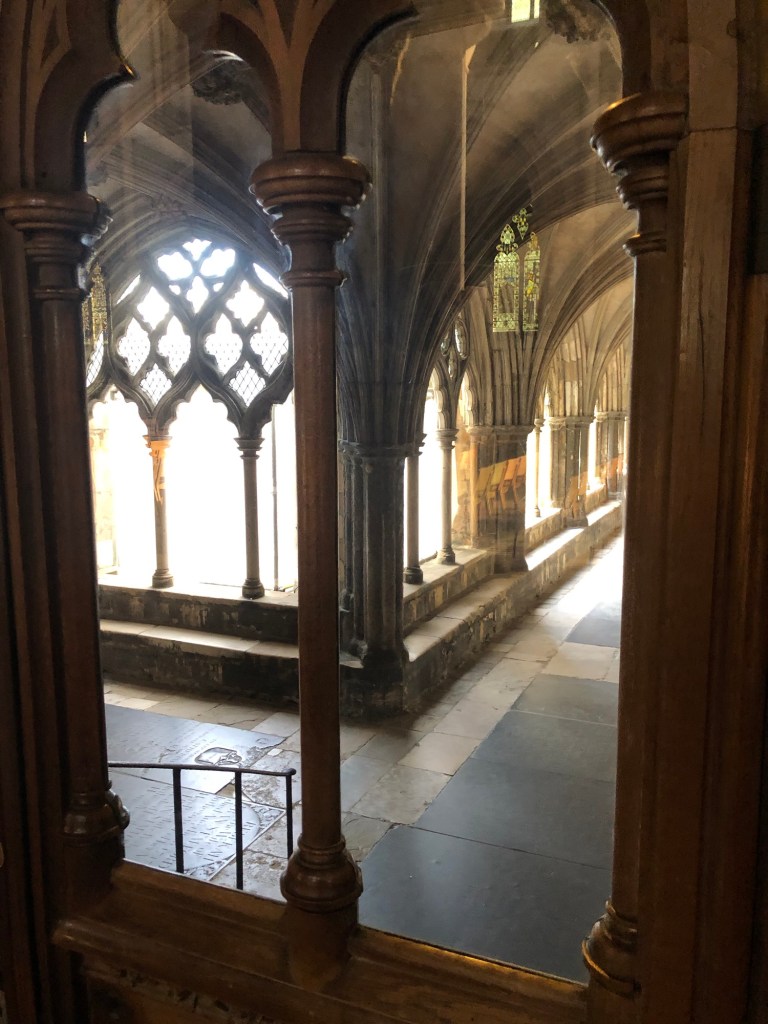
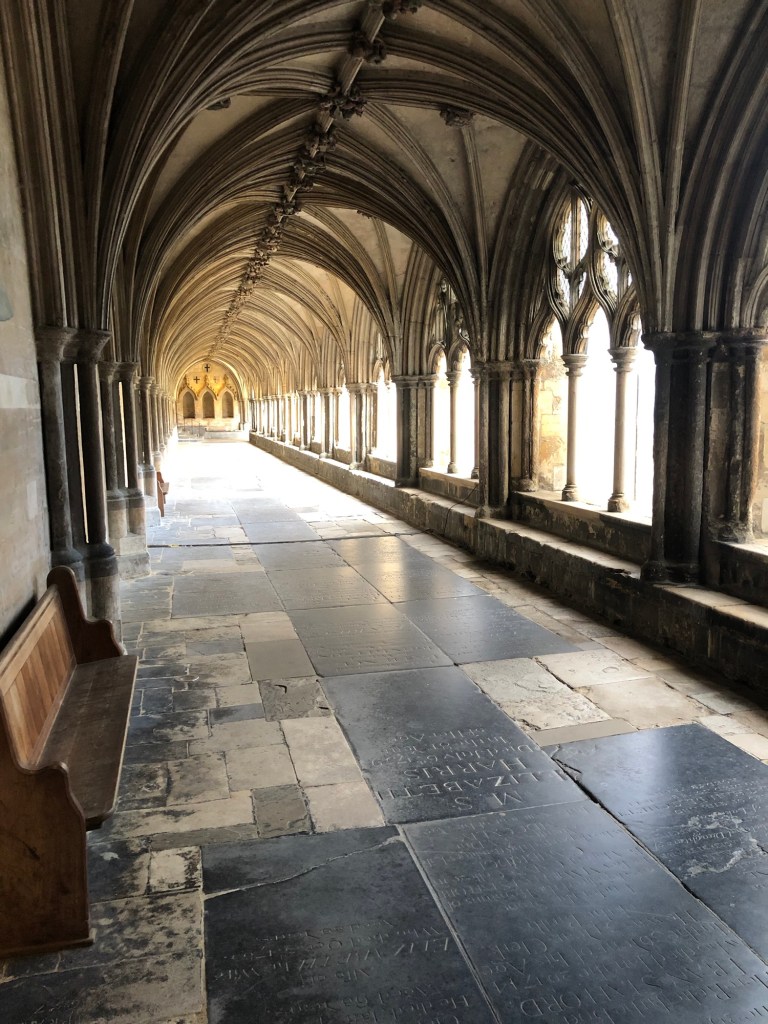
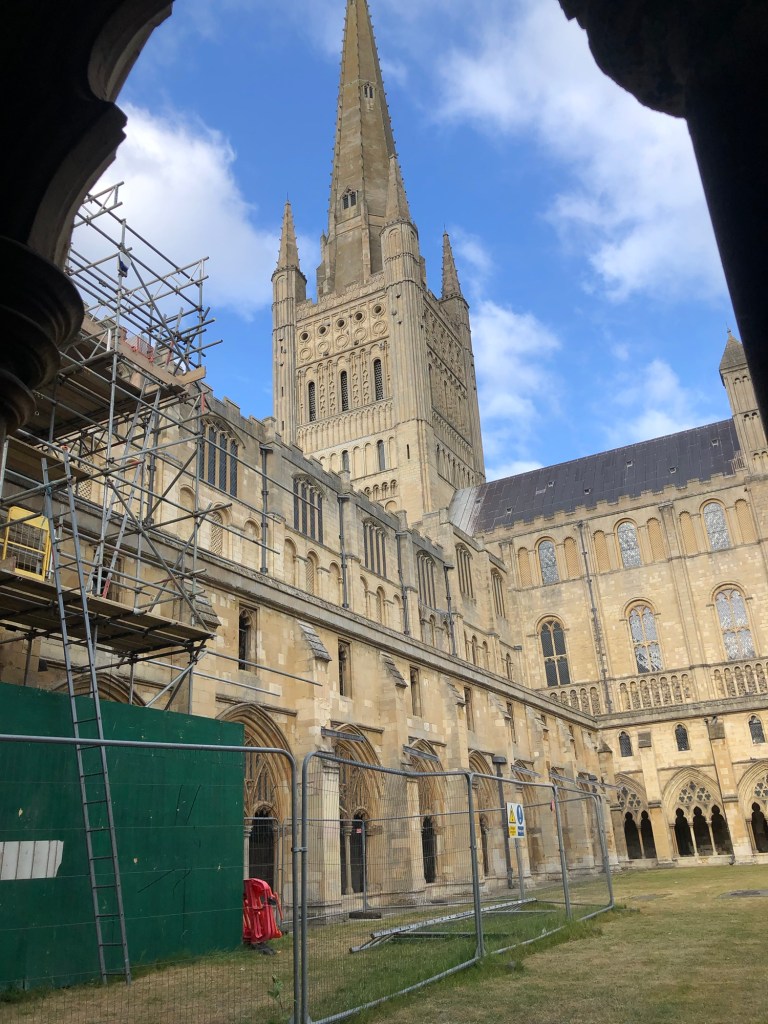
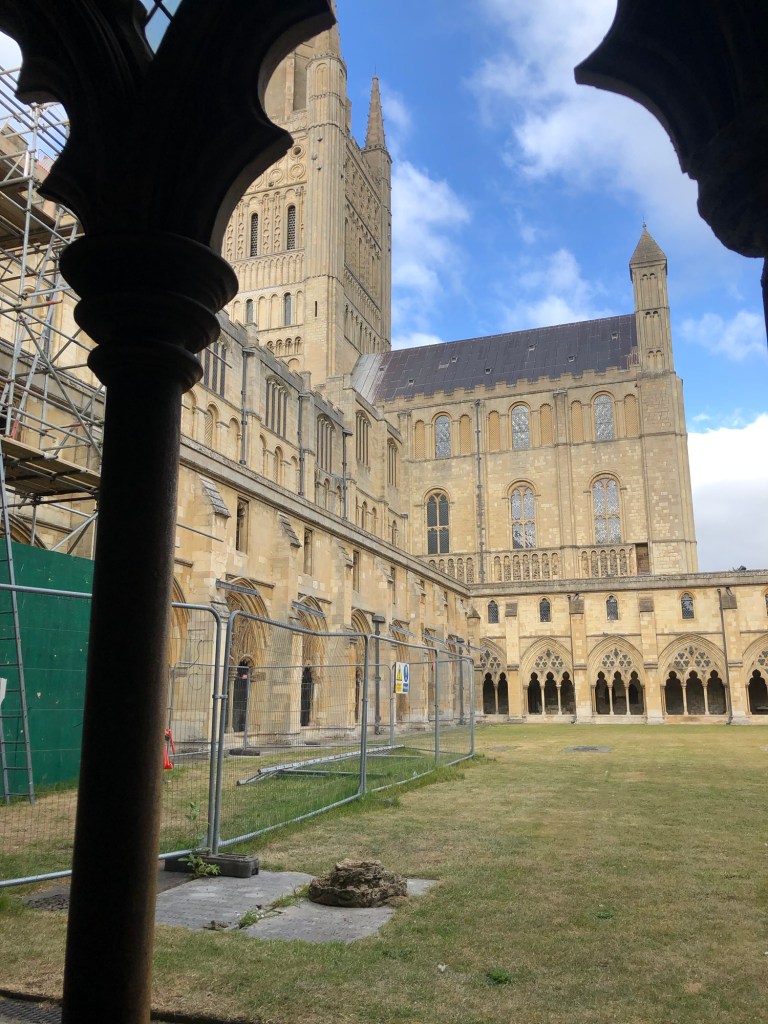
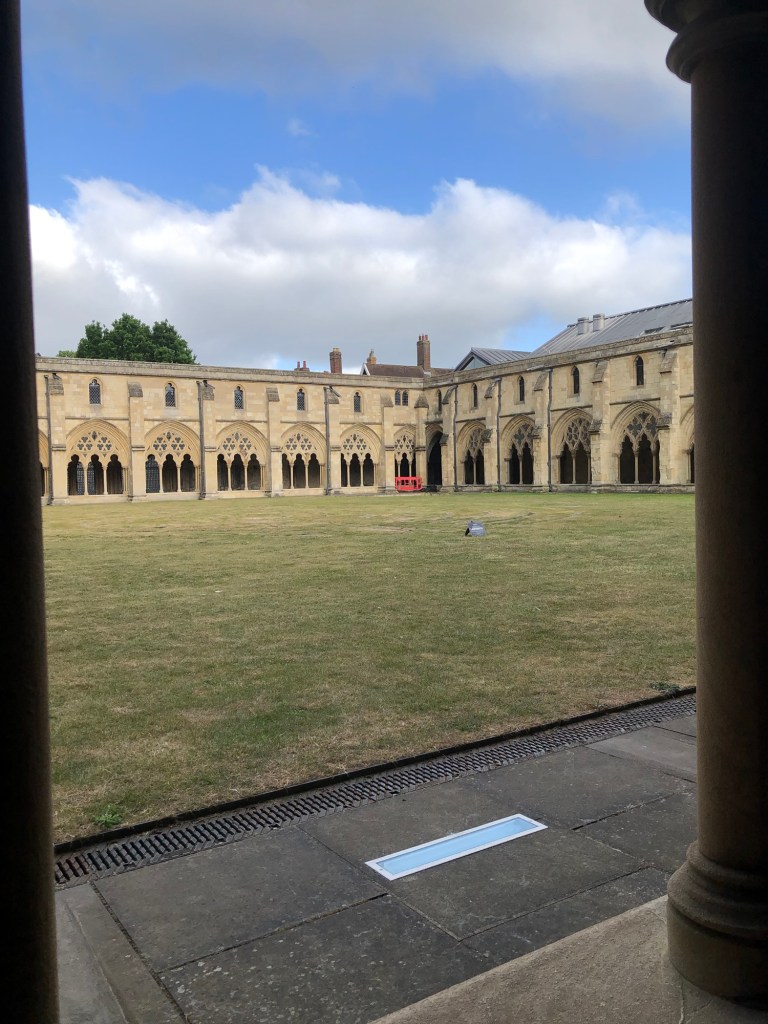
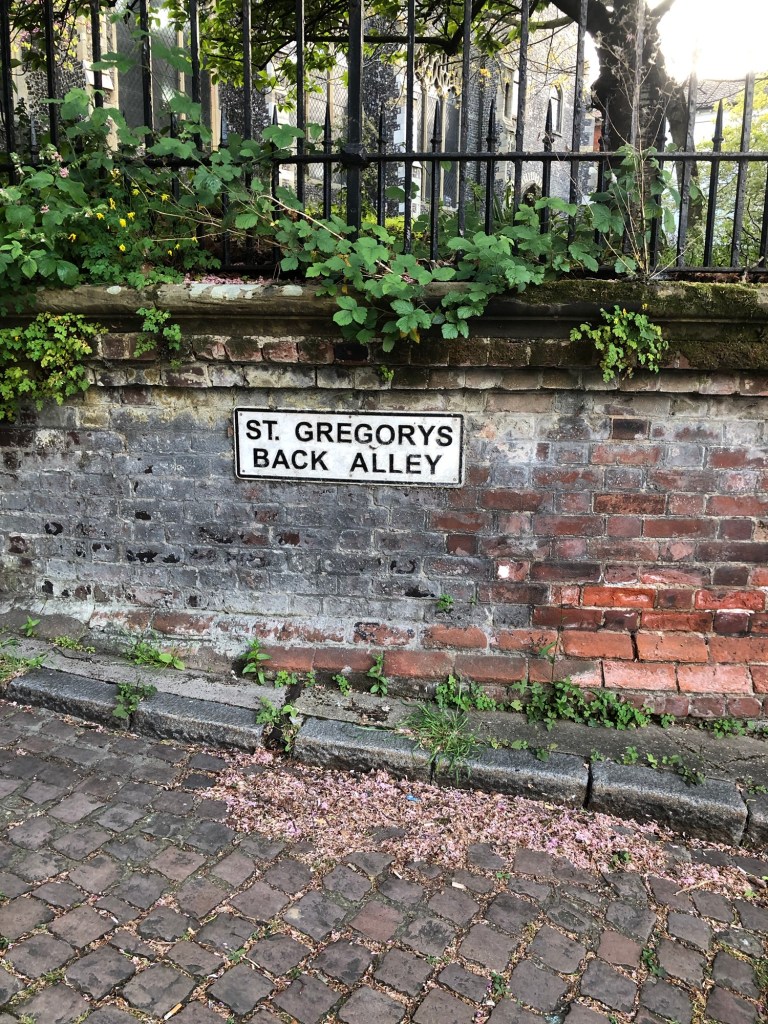
Below is a selection of photos of me (and this book) I took in Norwich Cathedral, which is not a forgotten church, but the closest I got to entering one while I was reading Sherlock’s book. And one photo of a Norwich street with a rude name:


- But not bothered about it, which (arguably) is cool… ↩︎
- They also said I use parentheses too much (which I do (because I think they’re funny)). ↩︎
- I won’t dip into it in the main body of the text, but I will offer you one as an example down here in the bowels of the footnotes: On page 153, Sherlock describes leaving his houseshare one morning to go to see a church and says goodbye to his housemate who was nursing a “Friday night hangover”. But this doesn’t make sense as, in the context of the trip, Sherlock is departing and it is not Friday night. And hangovers are named not for when they were caused, but for when they happen. A Friday night hangover would be a hangover you’d have after a big boozy lunch or even after brief – but heavy – post-work drinks. If it’s not Friday night anymore, then that’s not a Friday night hangover.
At least not in any circumstances that I have ever heard hangovers discussed. ..
Originally this post was going to be 30 paragraphs like the above. ↩︎ - If England is a country (I know it might *technically* (or legally) be a country, but is it *legally* (or technically) a country (or even meaningfully a country))? ↩︎
- I Googled “Is Bumpkin a slur?” and got no satisfactory answer either way. ↩︎

Thank you so much for reading TriumphoftheNow.com! If you like what you’ve read, please subscribe, share and order one of my books. If you love what you’ve read, why not order me something frivolous and noisy from this Amazon wishlist or make a quick donation via my ko-fi page?
I’m currently focusing on parenting and creative practice, so small donations are appreciated now more than ever!
scott manley hadley aka SOLID BALD live
Here’s a video of me recently performing at the prestigious (it has a Wikipedia page) comedy night, Quantum Leopard. Listen to how much fun the crowd is having. You could have that much fun, too!
Forthcoming gigs include the following – there may/will be others:
17th March 2026, 7pm: Slap & Giggle @ Coin Laundry, Clerkenwell
24th March 2026, 7.30pm: Lolipops, Southwark
26th March 2026, 7.30pm: Comedy @ Cosmic, Plymouth
9th April 2026, 7pm: Sunset Comedy, Chalk Farm
15th April 2026, time tbd: BALD PERSONALITY DISORDER 40min-ish WIP at Shirker’s Rest, New Cross (more details soon!)
27th June 2026: Twinkles Cabaret, London
9th August – 14th August: BALD PERSONALITY DISORDER at The Street, Edinburgh, part of PBH’s Free Fringe
Discover more from Triumph Of The Now
Subscribe to get the latest posts sent to your email.

 Triumph Of The Now
0 comments on “Forgotten Churches by Luke Sherlock”