
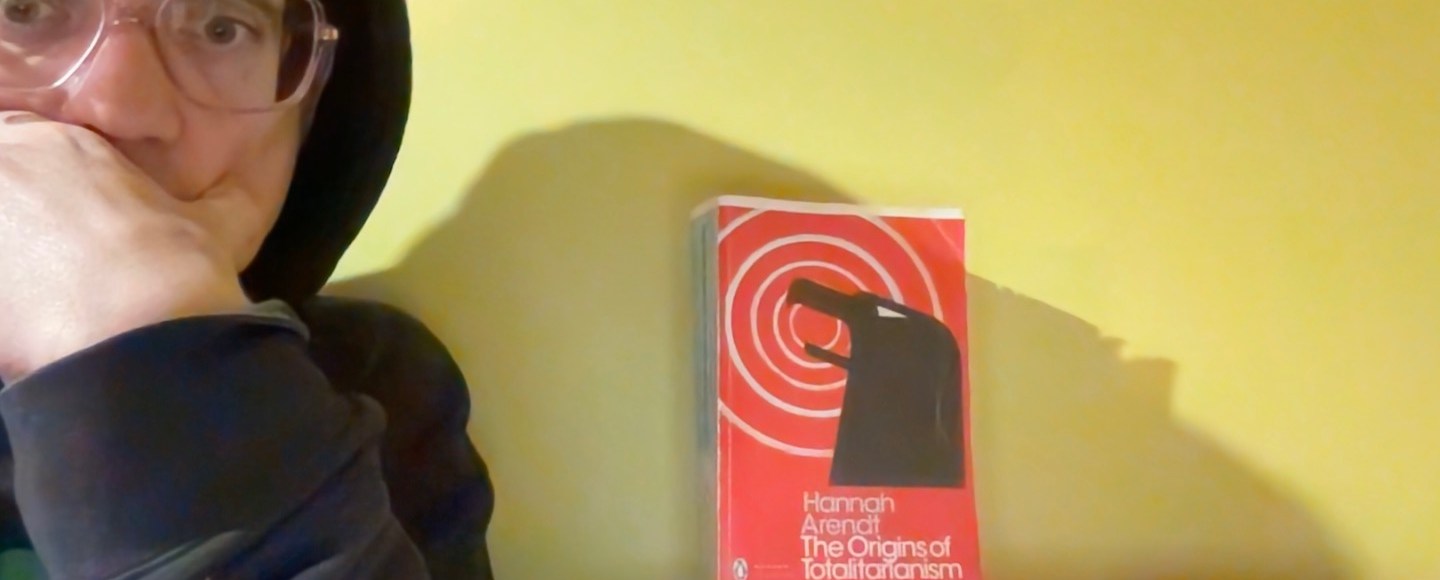

OK, well, confession time.
I actually finished reading this over four weeks ago, going so far as to cram read the final 200 pages in about a day and a half, in order to be able to free my mind – and my hand luggage – from this giant tome of a paperback before going on a two week (and a bit) December trip.
My plan was to spend my two weeks overseas blogging, thinking, writing, reading and relaxing everything but my mind as warm weather, no work and no distracting, depressing, London would permit me to live, for a while, in my own mind for a moment…
What I’d forgotten was that the phone I currently have is not suitable for typing anything longer than a sentence on (it starts getting warmer and slowing down when you try to add a second clause to an unsent email), and also that caring for a toddler – a child with a near-baby’s mind but a near-adult ability to walk, wander and climb – for 12 hours a day doesn’t really give your mind much space to stretch. Especially when you’re next to an ocean.
The reason why I went away was because my partner was invited to speak at a week-long conference in an exciting, overseas location, so the child and I tagged along for that week and then we went family exploring for a second week. I took many books, but only got to read them in that second half. That second week was great! But explorative, not relaxing. I didn’t relax. I read a bit. But I didn’t write a thing…
This is all irrelevant, though, as all of this happened after I’d read Hannah Arendt’s The Origins of Totalitarianism, a giant paperback that weighed my bag down for most of November and the first week of December as I scooted around London gigging and working.
It also weighed down my mind, and has continued to do so in the month since.
For those who don’t know, or have forgotten, Arendt’s most famous (and much shorter) book is Eichmann in Jerusalem, in which she introduced the world to the phrase “the banality of evil”, in her in-depth exploration of the criminal trial of a man who was not, supposedly, ideologically committed to genocide, but followed the orders and did the admin work to oversee the logistics to facilitate automated, racist, mass murder.
That text was written later in Arendt’s career, once she was established as a major figure in the intellectual circles of the United States, while The Origins of Totalitarianism was published in 1951, a mere decade after Arendt (a German-born Jewish person) fled Nazi-occupied France, which she had moved to in 1933 after a run in with the Gestapo.
This, then, was a philosopher and intellectual writing about and exploring totalitarianism who had witnessed, physically and directly, the realities of living in it.
Arendt had continued to study and think and reason, and this giant book, then, represents the totality of Arendt’s explorations on the topic through to the mid-50s (the expanded edition of 1958 seems to be considered the preferred version of the text), focusing on the regimes of Nazi Germany and of the Soviet Union, as it was run by Stalin.
Arendt looks into how totalitarian regimes rise, how they govern and, of course, what they do to their people and the people who they don’t consider their own…
She explores the similarities between those two regimes, which are crucially mass imprisonment, political control of the armed forces and a replacement of the police with a privatised form of visible militia…
…Fear, fear more than anything else, drives populations into acquiescing to the losses of freedoms and opportunities placed on them by these governments…
She writes about how stoking bigotry – in particular anti-Semitism – is often used as a way to coerce pliant populations into ignoring the meaningful causes of inequality, but also how a totalitarian leader and his (it’s usually a “his”) regime doesn’t need to have the total backing of its population to be able to do whatever it wants with impunity…
What’s needed, Arendt posits, is a chunk of the population who are totally on board with everything (all the violence, all the bigotry, all the cruelty and all the imprisonments and executions and banishments), a core who are willing to fight and die for whatever idealised future you’ve sold to them, but that this only needs to be maybe somewhere between 15 and 20% of the population…
If you can get to this point, totalitarian dictator, then make sure another 30/40% of your citizens are too intimidated or apathetic to meaningfully resist, then you’re laughing.
You don’t need a population to be willing to live in your image to make the nation do so…
Squashing resistance, making people scared of arbitrary detention – often doing arbitrary detention and torture just to show that you can – keeps people quiet.
It is quietness, it is a lack of resistance on the ground, that these regimes need to thrive.
It is when the protests are small enough and dispersed enough to arrest everyone involved every time that the resistance disappears… it is when the army or your private band of SS-type infantry can kill a few protestors a few times and it be considered – and made – “legal”, that people who don’t feel their life is on the line feel it’s better to shut up…
Arendt paints a harrowing portrait of the early part of the 20th century, but also offers a deeply fucking clear playbook of exactly what seems to be happening now in many places in the world that would have, previously, proudly considered themselves better than this…
In her concluding chapters, as the giant book moves towards its end, she introduces a key word that she thinks is essential in describing how a populace must feel before they’re ripe for a totalitarian take over. And that word is “superfluous”.
And isn’t that, isn’t that exactly how we have all been encouraged to feel over the past few decades of increasingly atomised late capitalism? (The smartphone has continued what the private vehicle began…)
Our jobs are more precarious than they used to be, and many of us (myself included!) exist within the freelance/gig economy model, where (especially at the less skilled end of many industries and job roles) people are constantly forced to contemplate their own replaceability… There are more people applying for every posted job, there are lay-offs due to the advancement of AI across many industries, there are-
We don’t even need people to take photos or create images any more… to write emails… to write blogs, articles, books, films, tv shows… WordPress, here, to the right of where I’m typing has MULTIPLE buttons it keeps adding, offering me AI to use instead of writing this myself…
This is my blog, and the fucking platform that hosts it wants to make ME superfluous. Which means I am, to this blog. I give them a three figure sum every year to be able to post my thoughts here on the regular, and even that doesn’t make me matter to the platform lol. It’s all just nothing, isn’t it???
And this is the same for people all over the planet – we are all constantly made to feel we are worth less than we used to be… People are more isolated, people are more alone, people are living their lives online and then getting frustrated about that… People compare themselves to the idealised rich on social media instead of to their peers… People lack meaningful community, people lack hope… people lack education and critical thought, too, and this is what is exploited and this is what totalitarians lean on.
And, yes, not everyone in the world is susceptible to the rhetoric of authoritarians, not everyone is liable to acquiesce to violence and cruelty and threat as normalised in exchange for whatever it is they’re being promised with easy, bigoted solutions to issues of economic inequality and exploitation…
But enough people are. It’s happened before. It’s happening now. And so many things are absolutely fucking identical…
A harrowing, upsetting, serious and sad read. We don’t learn from history. We just repeat. We just repeat.
–///–
One section early in the book I flagged as I read through:
“The most striking difference between ancient and modern sophists is that the ancients were satisfied with a passing victory of the argument at the expense of truth, whereas the moderns want a more lasting victory at the expense of reality.” (p. 11)
We were post truth before we were post truth…
–///–
There’s an in-depth study in here of the history of anti-Semitism both as a practice and as a political tool, including a lengthy discussion of the Dreyfus Affair… There’s lots about European colonialism and the ways in which this was different from Totalitarianism… There’s lots about the history of governance in South Africa… About race and racism, about bureaucracy and extraction, about politics and power and money and education…
It’s big, it’s dense, it’s complex.
It’s not a holiday read and it’s not a light read and it doesn’t fill a reader with confidence about what’s coming next for the world…
Filled with details about horrors and cruelties exacted by the Nazis that I hadn’t heard of before, filled with details about the methods and deliberate anti-methods of Stalin’s frequent purges…
It’s a serious, memorable, echoing book that lingers in the mind.
Worth a read, though it absolutely does contain spoilers for the future, I fear.
Or maybe not and I’m just worrying!

Thank you so much for reading TriumphoftheNow.com! If you like what you’ve read, please subscribe, share and order one of my books. If you love what you’ve read, why not order me something frivolous and noisy from this Amazon wishlist or make a quick donation via my ko-fi page?
I’m currently focusing on parenting and creative practice, so small donations are appreciated now more than ever!
scott manley hadley aka SOLID BALD live
Here’s a video of me recently performing at the prestigious (it has a Wikipedia page) comedy night, Quantum Leopard. Listen to how much fun the crowd is having. You could have that much fun, too!
Forthcoming gigs include the following – there may/will be others:
6th May 2026, 8.15pm: Prop Roulette at the Caroline of Brunswick for the Brighton Fringe
27th June 2026: Twinkles Cabaret, London
14th July 2026: Poole, Dorset
5th November: Isle of Wight
14th November: Welwyn
Discover more from Triumph Of The Now
Subscribe to get the latest posts sent to your email.

 Triumph Of The Now
This is great, you should pitch an essay based on this. Particularly taking up the idea of being superfluous with late stage capitalism; I think you are tying together some important ideas here and it deserves an expanded readership!
LikeLike