
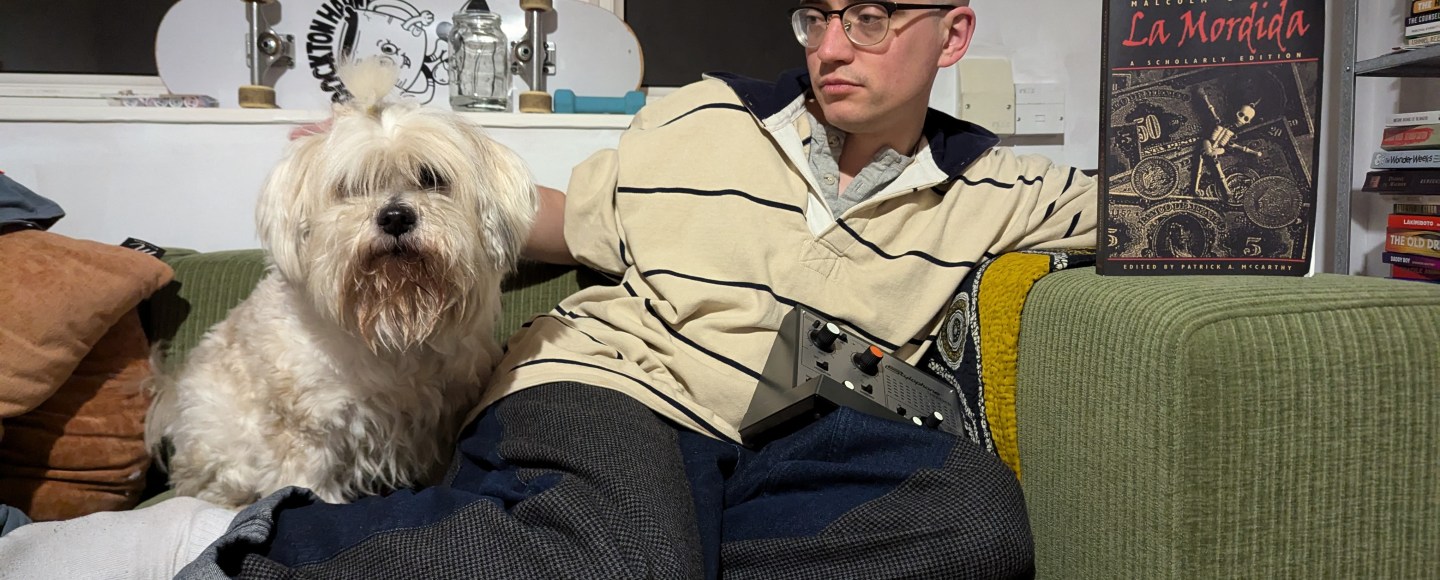

La Mordida: A Scholarly Edition is a huge exercise and a fascinating document.
La Mordida: A Scholarly Edition is an insight into creativity, into creative process and into personal failure, yet most significantly into creative failure, into apathy, stagnation, optimism, over-ambition, and alcoholism…
This is a document that shows alcoholism as a killer of inspiration, alcoholism as a killer of work and effort, alcoholism as a potently destructive force, and it evidences alcoholism’s deep responsibility for Malcolm Lowry’s minimal pre-posthumous publication bibliography, writ large and irrevocable.
–///–
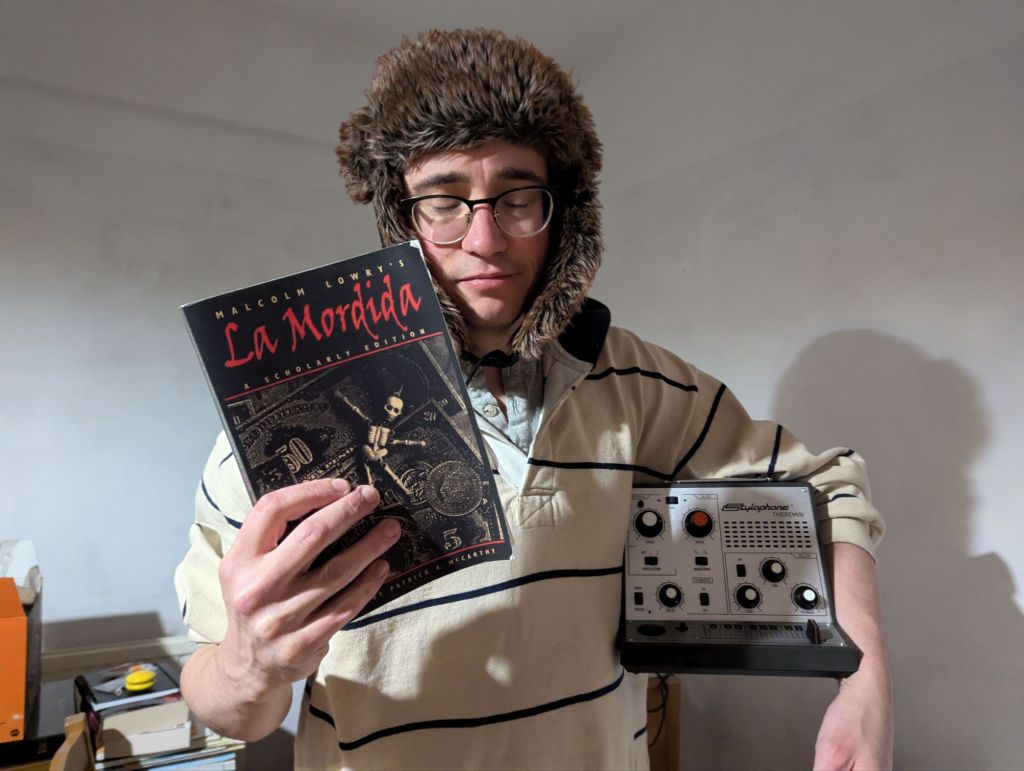
La Mordida: A Scholarly Edition – edited and annotated at great length by Patrick A. McCarthy – contains the contents of multiple notebooks related to a long-form novel project titled La Mordida (Spanish for “the bite” and a slang term for a bribe).
Some of the pages of these notebooks contained [essentially] bullet-pointed notes, some of them held semi-fleshed out drafts of sections and some of them contained almost-complete chapters of this projected novel. Malcolm Lowry and his wife, Margerie Bonner, worked on (and off) the project for several years.
The narrative premise of the planned novel is pretty simple: it would be a fictionalisation of the real life bureaucratic frictions Lowry and Bonner (his second wife) experienced when they travelled to Mexico in the mid-1940s. This was not the trip that formed the inspiration for Lowry’s acclaimed (and completed!) novel Under the Volcano, and the purpose of this visit was to research and finesse details for the final drafting process of that masterpiece (which was formally accepted for publication during the trip). Another reason for travel was that Bonner had never visited Mexico before (and her presence there as “Malcolm Lowry’s wife” – “confusingly” a different “Malcolm Lowry’s wife” to the “Malcolm Lowry’s wife” mentioned on the travel documents for that earlier, disastrous, trip – was one of the sources of bureaucratic friction).
While in Mexico, it became apparent that a small fine that Lowry had accrued when on the trip with his previous wife (living a life that was so much more fictionalised in Under The Volcano than the one planned to be depicted in La Mordida (e.g. everyone’s dead by the end of that one, pretty much)) had a) not been paid, b) had not been paid to the correct person/organisation or c) had been paid but had not been processed due to Lowry not also bribing one or more people at the time when he paid it. Lowry – and his novelised foil in La Mordida, Sigbjørn Wilderness – believed that the third option was the true one, but neither man seems to have had a particularly reliable memory, so it’s debatable whether the mess that follows was caused solely by corruption, or if there was some Lowry-negligence in there, too…
Regardless of the true source, the unpaid fine shows up on Lowry’s immigration record, and causes some bureaucratic nightmares, the unravelling of which basically takes over the entirety of their time spent in Mexico. The trip ends – a few weeks later – with the couple deported at the American border with both of them believing that they were verrrrrry close to Lowry being murdered by one particular immigration official who had taken a dislike to him.
And although this plot is wafer thin, the text that is contained within this volume is a huuuuuuge amount of words, and as the vast majority of the 45 chapters sketched out here consist mostly of fragments and notes for expansion (with many of them including phrases like “This should be one of the most terrific scenes in the book” (Ch. XXXII, p. 264), “This poker scene should be one of the high points in the whole book.” (Ch. XL, p. 283), this would have ended up being an absolutely gargantuan project had it been fully realised.
Very little happens, narrativewise… Sigbjørn & Primrose Wilderness (the Lowry couple avatars) spend every day [that government offices are open] visiting various bureaucrats in the hope they’ll be able to get their paperwork sorted, then spend pretty much every evening getting wasted…
Some evenings, one of them is trying not to drink, but most of the time they both do anyway…
Sometimes they go for a swim during the daytime, and sometimes they talk about thinking about writing…
The notebooks pertaining to La Mordida were all written after the events that are described, and though there is occasional repetition included here, Patrick A. McCarthy cribbed from masses of material (multiple revisions and rewrites and amendments) to create the version found here, and it includes a coherent beginning, middle and end.
–///–
One thing that is striking about this huge text is the extra-textual conversation that goes on within it between the two members of the writing team. This conversation not only shows disagreements and arguments about how and where the novel should go, but also incorporates arguments about their own individualised remembrances and interpretations of the past. The following example contains divergent memories about a train journey late in the novel: “After Primrose is asleep (Margienote: I never slept a goddamn bit on that horrible train, I can’t sleep sitting up anyhow) […]” (Ch. XLIII, p. 291).
What moments like this make very apparent is that La Mordida was a collaborative project between Malcolm Lowry and Margerie Bonner, and the publisher (and editor?)’s choice to solely put Lowry’s name on the cover of this book feels very regressive, and is a choice not justified by the text…
To see this as anything other than collaborative would be quite difficult, given the way this has been edited. La Mordida seems very much a co-production between two people who see each other’s intellectual contributions as equal, rather than Margerie Bonner acting as secretary slash typist for Malcolm Lowry.
That this novel was not one of Lowry’s in-progress works edited in the ’60s and ’70s into a paperback-sized, Penguin-approved manuscript form (e.g. Dark as the grave wherein my friend is laid (which I loved) and October Ferry to Gabriola (which I didn’t love so should probably revisit as an older, wiser, reader)) speaks to the fact that this project was a very long way from completion, to the point where it wasn’t something that Bonner could have “tidied up” on her own, as almost all of the book remained unwritten at the time of Lowry’s death, despite the large word count as it stands. Clearly, this was not a project Bonner could complete alone, though possibly only because she knew that if she were to do so, her name would likely be absent from the cover…
–///–
There’s beautiful, poetic, prose in here… there is witty wordplay from time to time, but mostly there is a grim depiction of the stultifying and destructive repetitions of addiction.
At a younger, more unhappy, point in my life, the alcoholism depicted in Malcolm Lowry’s writing struck a miserable chord with my own miserable life, and seeing it written in such an elevated, modernist, manner made me feel like my troubles at the time were were less unique, less lonely, but also less boring than they felt (and god, they felt boring)…
Reading La Mordida a decade beyond that point in my life, it’s striking how little recognition I felt.
For me, personally, once the exterior factors pushing me towards drink and misery and self-hatred were removed, the urge towards alcohol as balm very much evaporated – gradually rather than instantly, but steadily, slowly, irreversibly (so far).
I don’t find myself on benders or binges anymore, and though I may enjoy having one drink more than is sensible from time to time, I cannot think of more than a handful of times in the past 4 or 5 years when I’ve been a drunk, like Sigbjørn Wilderness was nightly.
And obviously I regret those handful of times, of course I do – all habits, especially bad ones, are hard to break – but I’m not living as if an alcoholic anymore (see my work in this anthology)… There are, obviously, many holes that exist in my life as a result of the misery and stagnation of my twenties, holes which even now (in the second half of my thirties, bleurgh) I haven’t quite fixed, but there are other things that I thought would always be impossible for me as a result of that time (e.g. getting writing published, having a baby, starting a performance practice) that have been able to resolve themselves, so ultimately I feel that… maybe… all the other holes (e.g. the social ones) that have to be sorted out will have to sort themselves out by necessity eventually, right… though maybe they won’t. Who knows?
–///–
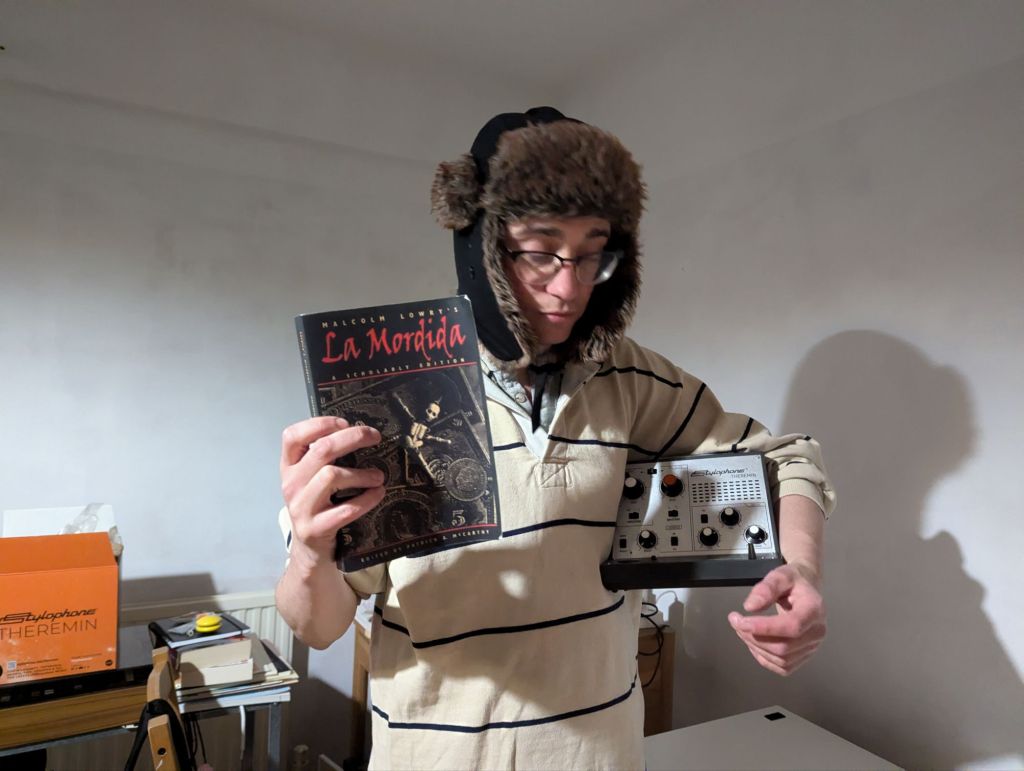
My life (and in particular my relationship to alcohol) may have improved between my twenties and thirties, but this was unfortunately not the case for Malcolm Lowry.
What you get, then, with La Mordida is a catalogue of regrets, a play by play of the ways in which the Lowrys’ drinking got in the way of their creativity and their ability to live an ordinary day-to-day life…
Within La Mordida, we see how the Wildernesses (and the Lowrys they are based upon) were unable to deal with bureaucracy… we see the shaking hands of alcoholic withdrawal become a plot point (an inability to use signature as a proof of identity)… we see negative thought patterns spiral, and we also see blunt ignorance, pride and naivety combine to prohibit the understanding of a simple solution for all of the problems, which was just to do [more] bribing…
La Mordida documents a failure to accept the terms of reality as they are, and this persists not only within the text, but also outside of it… It is this same impulse that feeds the alcoholism that contributes to the failure to get the project (as envisioned) finished…
–///–
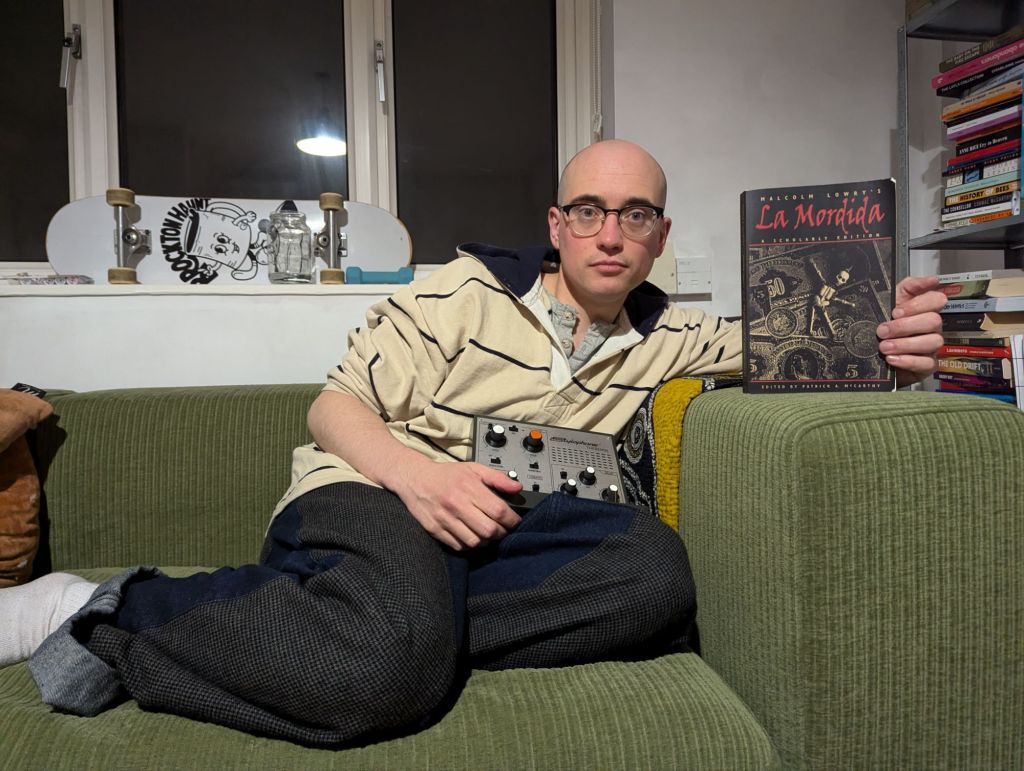
It’s great that this book exists; there really is some beautiful prose in here.
There were moments where I wept at the beauty, there were sections that I read aloud because the poetry and the flow was so, so, so, so effectively done. And although these moments were not consistent, there is (pretty much) something to be engaged with in all of the 45 chapters included here, be it an idea or a phrase or a reference, if not a full passage. That said, there are some sections – particularly the various versions retelling a journey the Lowrys made from Vancouver to Haiti – where the text remains engaging and exciting and beautiful for pages and pages and pages in a row…
This book is also commendable and interesting due to its insights and less sensationalised versions of the settings and locations and real life events that inspired Under The Volcano, and it’s also nice to see Margerie Bonner’s writing where it isn’t refracted through Malcolm Lowry’s and it’s nice to see the conversation about collaboration that exists…
But… but but but….
Obviously this entire book is a testament to the planned novel’s failure to be completed, for this project’s failure to get where it needed to be… The fact that this text is the most publishable version of the La Mordida manuscripts shows the work that wasn’t put in at the drafting stage.
There’s so much text, there’s so much description with this so little narrative, there’s so much writing and so much editing to do, but there was so much writing still yet to be done…
Many scenes here are incomplete, many chapters contain only notes for what should go there… we get sketches for moments, or a single paragraph that describes what (in the final version that doesn’t exist) should take up pages and pages and pages and pages…
For this to have been a real novel as envisioned in these notes, it would have been absolutely huge… It was a deeply ambitious project… but was it impossibly so?
Would the Lowrys have ever been able to put this story into a giant novel that held readerly interest?
The adjective Kafka-esque is readily applied to this text (with its bureaucratic circles and circles and circles and spirals), but the Kafka’s books were short, not 2,000 pages long, which is what this was careening towards…
There was possibly no way for La Mordida as planned to have been a success… but that doesn’t mean that a version of this narrative couldn’t have been made beautiful and haunting and terrifying and engaging, had the time and the effort been invested and a realistic appraisal of the quantity and the content taken place. None of this happened…
–///–
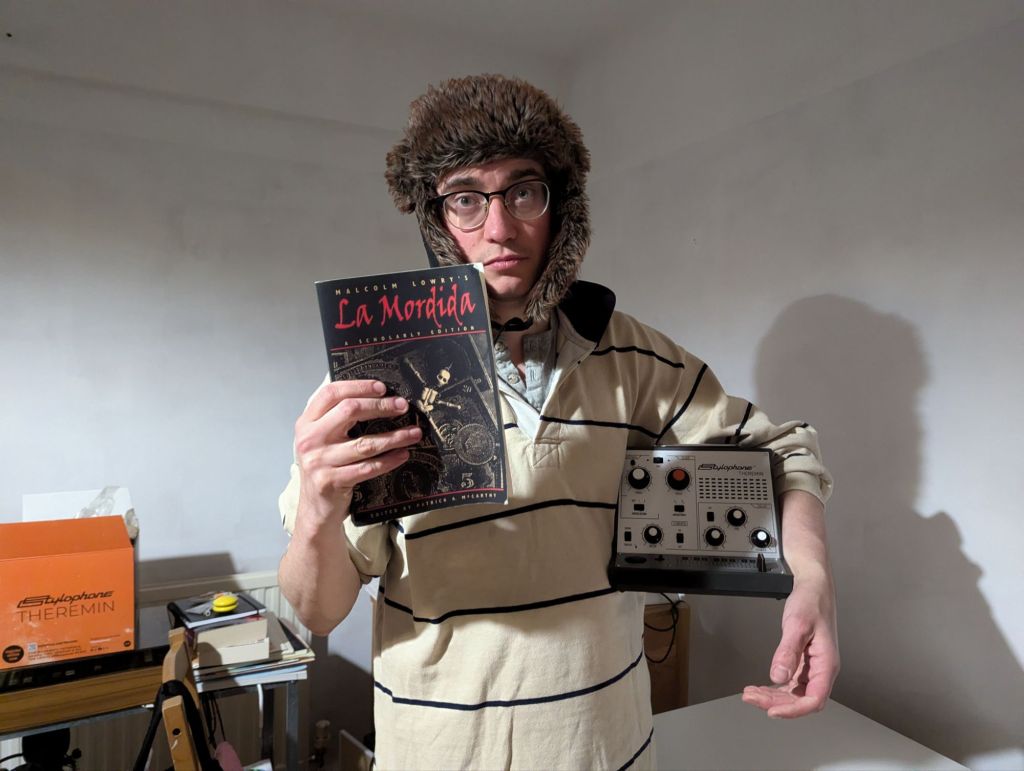
Patrick A. McCarthy was working from a shambolic collection of text, and has done an incredibly impressive job in putting things together and finding a flow and a narrative and editing the masses of writing into a version of La Mordida that is readable and legible and engaging… I really do think that for anyone interested in the process of writing large books – and obviously anyone interested in the life and work of Malcolm Lowry – then this book has a lot to offer.
But it’s sad.
It’s really sad.
It’s sad to read this and see how Lowry’s ambitions and intentions were unmatched by his abilities and work ethic.
The book he wanted to make would have been impossible, and did he give up when he did because it would have ended up abandoned either way?
Lowry seemed to be hung up on experiences and moments of his life that he believed held a universal meaning and potency, but a lot of the time they really didn’t, and with a book of this length, the tension of the bureaucratic friction evaporates due to it being drawn out and being repeated over and over again…
I’ve lived in different countries and have a legal spouse with a different country’s passport to me, so I’ve experienced bureaucratic friction, too, but the problem is that when it happens, you just have to sacrifice pride and let the people with powerful paperwork dictate what has to happen and when…
I also struggled to maintain full sympathy for the Lowrys (sorry, the Wildernesses) throughout because almost all of the problems they (and their fictional avatars) had would have been a damn site easier to fix if they swallowed less alcohol and swallowed more pride and just put a few American dollar bills into the correct hands and became able to move on with their time and their Mexican holiday…
It’s sad.
It’s sad.
It’s really sad to read this and to understand how unwell Lowry was, how stuck he was in the last decade of his life…
Lowry was able to produce his one masterpiece, Under The Volcano, but everything else of his that ended up being published was left incomplete at his death. Some projects were more incomplete than others (La Mordida allegedly the most incomplete of them all), and though the collection of his short fiction (Hear us o lord from heaven that dwelling place) contains some masterful work, and Dark as the grave wherein my friend is laid I enjoyed a lot, it’s difficult to know with these (and also with Lunar Caustic and October Ferry to Gabriola), how much of the finessing work that took place on those manuscripts was only able to happen once Lowry was dead and wasn’t adding to the piles of notes without engaging with the piles…
It’s sad.
It’s sad to see someone maintain the creative urge but lack the discipline required to harness it tight, but then to lose even the fleeting discipline, lose it in a thousand bottles, and lose, too, the ability to control anything…
–///–
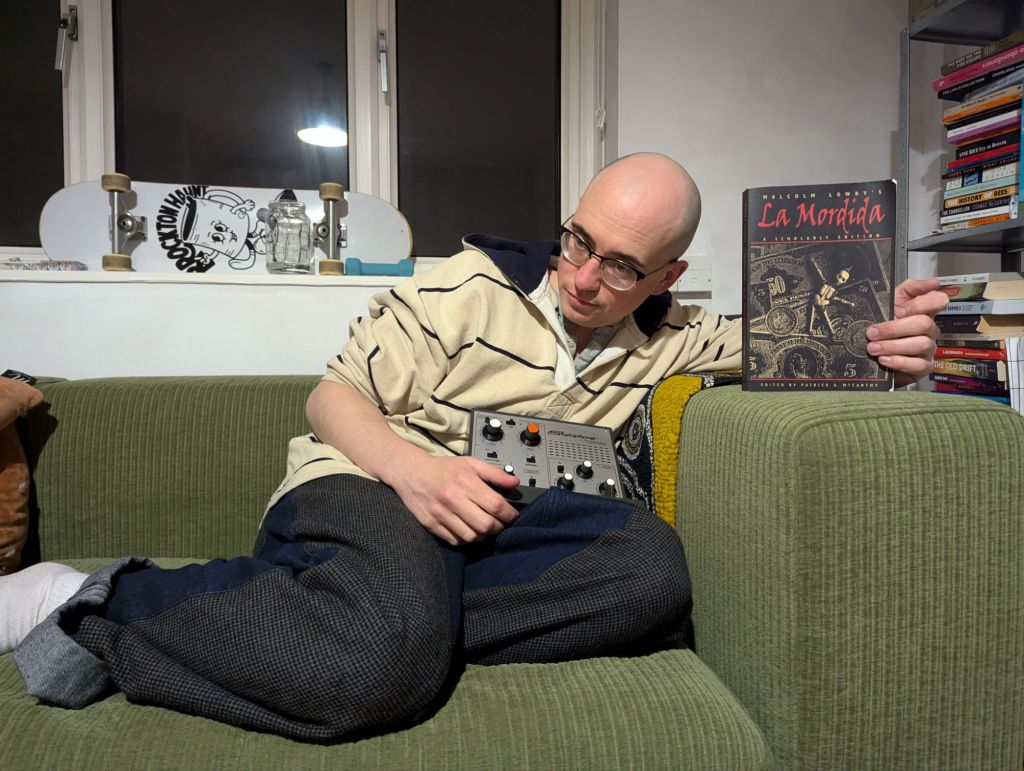
This published version of La Mordida functions as a document of addiction, not just in the way in which the narrative is recorded, not just in what it documents happening to [these very slightly fictionalised versions of] Malcolm and Margerie in Mexico, and not just in the way they write about it afterwards… Here they are writing about themselves without any fundamental sense of regret or even an idea that they maybe could have – and arguably should have – behaved differently to get a different result…
One doesn’t get the impression that the drinking the Lowrys write about is something they think was a bad idea… they write from the future as if all of the drinking they were doing in Mexico was a justifiable and an excusable response to the situation they found themselves in, rather than something that was exacerbating the problems and the terrors they found themselves within.
It’s sad
It’s sad, it’s sad, it’s sad…
The big big big potential is there and the huge huge huge ambition is there, but the care, the care, the care and the work, the work, the work isn’t…
This volume makes it clear that meaningful treatment for addiction for people in deeply toxic and mutually destructive relationships in the 1940s and ’50s simply wasn’t a thing… The Lowrys were yoked until one of them died and they probably really shouldn’t have been.
This is – it really is – a sad book, a melancholy book, but it’s incredibly well put together in an engaging, informative and accessible manner.
The editor’s task here was a humongous one, but it’s been done dexterously and carefully and successfully.
The project of bringing the notebooks of the manuscript-in-progress of La Mordida to readers is one that has been achieved, in a way that the actual La Mordida project itself never was or will be…
I don’t think there’s much here, really, to recommend to anyone who hasn’t already found their way through the rest of Lowry’s work… This doesn’t have the quirky bizarre joy of the Tender Is The Night screenplay attempt, and this certainly doesn’t have the stripped down stepping stone between Ultramarine and Under The Volcano interest of Swinging The Maelstrom or In Ballast to the White Sea…
This is a curiosity, a fragment of fragments, a distillation of the mind- and work-wrecking ferocity of addiction.
But for Lowry scholars, and for people interested in this sometimes brilliant but frequently tragic writer’s life and work, there’s definitely something important to see. Casual readers, stay away..
Thank you, Patrick A. McCarthy, if you’re still alive… this was an important read for me.
Published by the University of Georgia Press – order direct via this link

Thank you so much for reading TriumphoftheNow.com! If you like what you’ve read, please subscribe, share and order one of my books. If you love what you’ve read, why not order me something frivolous and noisy from this Amazon wishlist or make a quick donation via my ko-fi page?
I’m currently focusing on parenting and creative practice, so small donations are appreciated now more than ever!
scott manley hadley aka SOLID BALD live
Here’s a video of me recently performing at the prestigious (it has a Wikipedia page) comedy night, Quantum Leopard. Listen to how much fun the crowd is having. You could have that much fun, too!
Forthcoming gigs include the following – there may/will be others:
24th March 2026, 7.30pm: Lolipops, Southwark
26th March 2026, 7.30pm: Comedy @ Cosmic, Plymouth
9th April 2026, 7pm: Sunset Comedy, Chalk Farm
15th April 2026, time tbd: BALD PERSONALITY DISORDER 40min-ish WIP at Shirker’s Rest, New Cross (more details soon!)
27th June 2026: Twinkles Cabaret, London
9th August – 14th August: BALD PERSONALITY DISORDER at The Street, Edinburgh, part of PBH’s Free Fringe
Discover more from Triumph Of The Now
Subscribe to get the latest posts sent to your email.

 Triumph Of The Now
Well, artists and addiction: that’s an old story that just keeps coming back in another jacket. I always tell artists who experiment with addictive hallucinauts in order to “get inspired”: drugs will not bring out what hasn’t been there in the first place. The same for traveling. Unless you need it to do some research on the setting of your novel or book. As a Japanese saying goes: You will find nothing on the top of the mountain that you haven’t brought with you (apart from the view that is).
LikeLike