
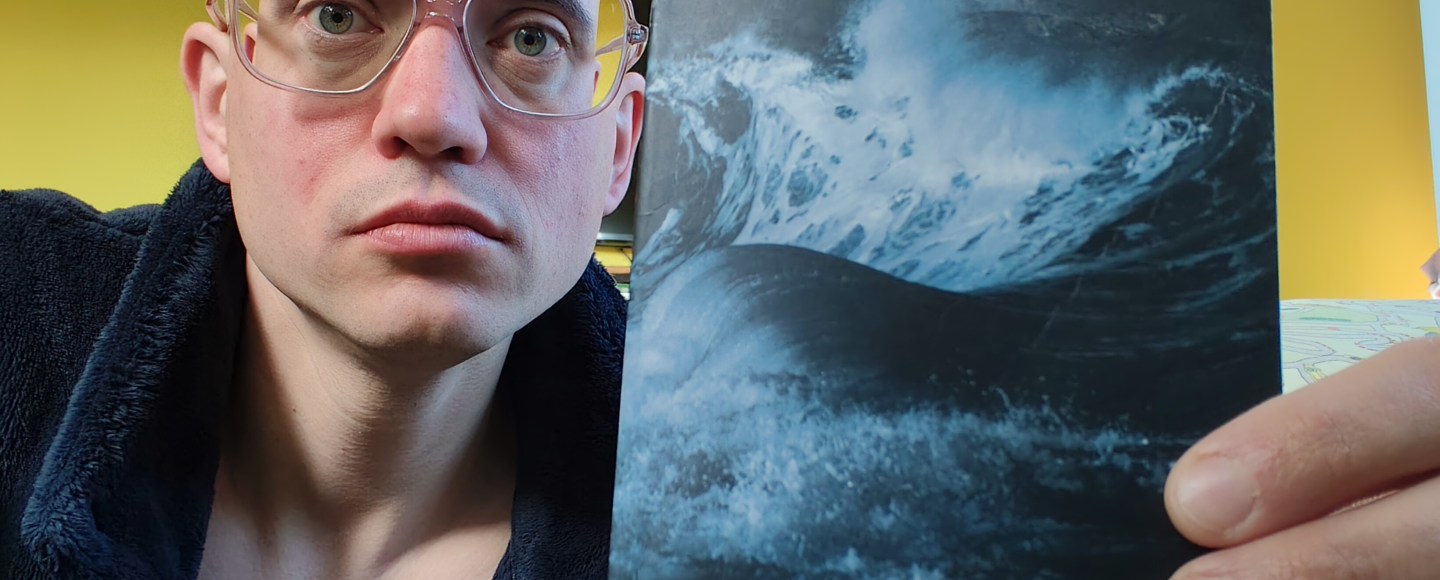

The last time I read The Old Man and the Sea was in 2009, on a deserted Cuban beach.
I had hair and youth and it felt like the world was at my feet. Naiveté and beauty, which at that point in my life I had both of in bucketloads, were affording me opportunities and experiences that my younger self had never dreamed of. The world of culture and the world itself were opening up to me and things were exciting. Few things felt more exciting, though, than the literature of Ernest Hemingway.
I got my first job not in a dump of a pub in the summer of 2008, in a swanky cocktail bar (a trendy cocktail bar, perhaps, more accurately), in the city where I went to university.
One of the other artsy cocktail bartenders (who then seemed an ancient shell of a human but was probably 22 years old), a recent English graduate from the same literature course I was then on, said to me: “Oh, you’re interested in alcohol and English literature, you must love Hemingway.”
Honestly, at that point I didn’t really know who Ernest Hemingway was.
His was a name that I heard before, but the course syllabus of the first year of my English literature degree (which I’d just finished) been very English focused, and – as I’ve mentioned on this blog before – I did not grow up with any domestic access to culture, so Hemingway was not a writer whose work I had encountered organically and read as a teen, like most people I’ve encountered in my life since then. The first book of Hemingway’s I read that Summer was To Have and Have Not, which is probably one of the few of his major books I never re-read during the years of my very early 20s when I returned to Papa’s work multiple times.
For Whom the Bell Tolls and A Farewell to Arms haunted me and recurred in my reading… That combined volume of his first few short story collections was the first time I ever really enjoyed short stories, though tbh it was probably one of the first times I’d ever really encountered them en masse.
When I came to The Old Man and the Sea I raced through it, as most people do. I loved it and I loved the work of Hemingway and I ended up spending all the money I made working a Summer job in 2009 going to Cuba for a couple of weeks (going to University was a lot cheaper then) basically because of how much I’d enjoyed it as a setting and a presence in his works. I went to Hemingway’s house, a preserved museum that you can look through the windows of and see how he once lived. You can see the graves of his cat. You can see all the bookshelves in every room, even the toilet. You can see the tower he made to sit in and be able to see the city towards the sea. It’s a place I think about a lot, that particular house. The simplified biographical narrative built into the panels of information in that museum are blunt in their diagnosis as to why Hemingway killed himself: it was missing this house, it was missing this city, it was missing Cuba, because politics had made it impossible to return.
I don’t remember which other books of Hemingway’s I took with me on that trip (it was a few years before I began this blog and this needless personal record), but I have a distinct memory of rereading this one in a single setting somewhere beautiful, somewhere stunning.
One of those rare moments of my life where both excitement and potential and a ditziness were all still at paramount levels. Before the realities and the intricacies of the world and what it costs to be adventurous within it had begun to be found. Also, I still had hair which made everything easier.
I remember weeping at this book, I remember being awed that this strange, mentally ill, long dead Nobel laureate was able to interest me so intensely, so vigorously so heartfully, in the simple tale of a man catching a big fish and then that big fish being eaten by sharks.
I don’t know how many words there are in this book, and how that compares to other categories of literature, but it doesn’t matter if this is (technically) a novel, a novella, a novelette, or a short story, because none of those really convey what the book actually contains, which isn’t just words. This is a life, right, there is the whole of a person’s life, near – but not at – its end, found on these pages…
It’s full of flashback, but not really to the moments of a life that a novel would normally flash back to, not the moments that a person might hope to fixate on at the end of their life… An arm wrestling contest, the repeatedly seen sight of wild lions lounging close to the Atlantic, conversations about which American baseball players most frequently holiday in Havana…
Santiago (the eponymous old man) hasn’t solely spent his life in the Caribbean (the eponymous sea), and though this is where he is for the majority of this book, alone but for the fish he is fighting at the other end of a fish line, he is a person who has loved and been loved, and who continues to exist within a community, even if his own use towards that community has diminished significantly from what it once was.
Hemingway’s blunt prose is still somehow precocious, an old man himself by his own mythology at this point (though barely into his mid-50s when this was published), there is still something of the youthful literary ingenue to his work. It is still possible to read this and think, “Can he do this?”, “Does this work?”, “Who is this to do this to language?”
Because there is something about Hemingway’s style that is easy to describe and to mimic but is very hard to do. There is a reason why he is a lauded writer and why not everyone else who has used clipped short sentences shorn of adverbs isn’t.
The lie is that in using fewer words, the writing becomes easier because there is less space for gaps. But that’s not true. To write prose that is this evocative while being minimally descriptive is fucking hard, almost impossible for most people.
There is so little text in Hemingway’s writing at its best, it becomes almost solely and exclusively subtext. All we read is what we don’t read, all we understand is what is not stated. The only meaningful things that are said are the things that aren’t said at all.
Earlier in Hemingway’s oeuvre, the famous short story ‘Hills Like White Elephants‘ maybe shows that more quickly and with more brittleness than here, but there is longing and loss and pride and regret and shame and hope and passion and personhood here on every fucking page.
Yeah. Yes. It’s about an old man going up against a massive fish that he beats but is then eaten by sharks, but it’s about more than that, and that is so much more than it sounds like.
Is it meant to be a metaphor? No.
Is it meant to be imagery? Perhaps, but it’s also a tale both simple and complex.
What does it mean to age?
What does it mean to define yourself by something that it’s no longer practical or realistic to define yourself by?
What does it mean to be an old man in a sea?
What does it mean to be a fish, to be a boat, an ocean, a current, a youth, a mentor, a mentee, a person who explores and travels and a person, who, later, stagnates and stays steady?
It’s all there. In so few pages, so few words.
What a talent. What a masterpiece. I’ll be re-visiting some more Hemingway or hitting up the handful of his books I’ve never read soon, I’m sure.
An absolute pleasure.
–///–
Some indicative quotations follow:
Once there had been a tinted photograph of his wife on the wall but he had taken it down because it made him too lonely to see it and it was on the shelf in the corner under his clean shirt. (p. 8)
When I was your age I was before the mast on a square-rigged ship that ran to Africa and I have seen lions on the beaches in the evening. (p.13)
‘Tell me about the great John J. McGraw.’ He said Jota for J. (p. 14 – a weird but fun feature of the book is Hemingway reminding his readers that the characters are speaking Spanish, not English.)
they passed a great iskland of Sargasso weed that heaved and swung in the light sea as though the ocean were making love with something under a yellow blanket (p. 54)
Imagine if each day a man must try to kill the moon, he thought. The moon runs away. But imagine if a man each day should have to try to kill the sun? We were born lucky, he thought. (p. 57)
After that he began to dream of the long yellow beach and he saw the first of the lions come down onto it in the early dark and then the other lions came and he rested his chin on the wood of the bows where the ship lay anchored with the evening off-shore breeze and he waited to see if there would be more lions and he was happy. (p. 62)
pain does not matter to a man (p. 64)
Of the fish: You loved him when he was alive and you loved him after. If you love him, it is not a sin to kill him. Or is it more? (p. 81)
After he kills the first shark (of too many) to go for the dead big fish: you enjoyed killing the dentuso, he thought. He lives on the live fish as you do. He is not a scavenger nor just a moving appetite as some sharks are. He is beautiful and noble and knows no fear of anything. (p. 82)
It’s beautiful stuff. Simple stuff, it seems. But not simple. Not simple at all. Very important stuff.

Thank you so much for reading TriumphoftheNow.com! If you like what you’ve read, please subscribe, share and order one of my books. If you love what you’ve read, why not order me something frivolous and noisy from this Amazon wishlist or make a quick donation via my ko-fi page?
I’m currently focusing on parenting and creative practice, so small donations are appreciated now more than ever!
scott manley hadley aka SOLID BALD live
Here’s a video of me recently performing at the prestigious (it has a Wikipedia page) comedy night, Quantum Leopard. Listen to how much fun the crowd is having. You could have that much fun, too!
Forthcoming gigs include the following – there may/will be others:
21st September: West End New Old Act of the Year HEAT, near Goodge Street
5th October: The Defectors present Scratch ‘N’ Sniff at Bread & Roses, part of the Lambeth Fringe
15th October: The Bar VXXXII Comedy Club, Colchester
26th October: Alternative Comedy Jam, Brighton
29th October: The Comedy Centre, Isleworth
5th November: Isle of Wight
21st November: Twinkles Cabaret, London
13th December: Dr Mew’s Sci-Fi Cabaret, Aces & Eights, Tufnell Park
7th January 2027: I’ve got something in the calendar for this but no details
10th March 2027: Lydford, Devon
Discover more from Triumph Of The Now
Subscribe to get the latest posts sent to your email.


Pingback: Re-reading The Handmaid’s Tale by Margaret Atwood – Triumph Of The Now