
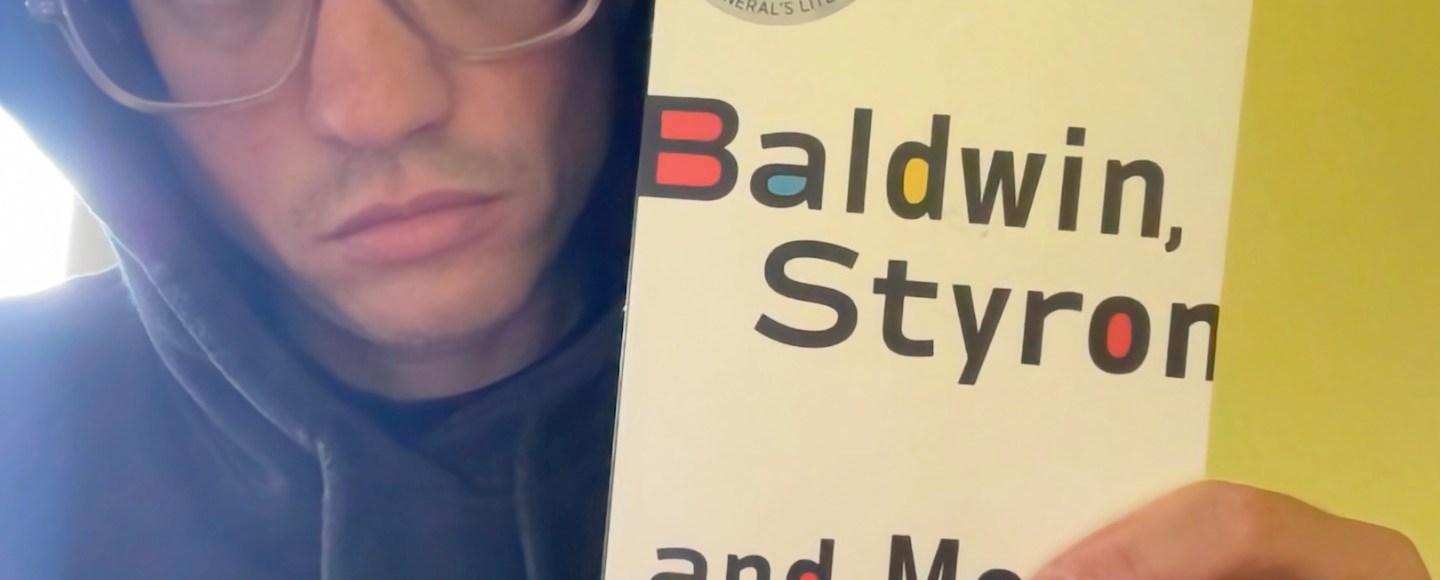

Baldwin, Styron, and Me is published by Biblioasis – read more here
Biblioasis is one of my fabourite publishing houses. Based in the intriguing faded automobile and liquor town of Windsor, Ontario, it has expanded (I believe) out of the Walkerville bookstore it once operated out of, but has lost none of its charm or ambition.
Down in Southern Ontario, in the literal and figurative shadow of the massive bridges (now two!) linking Canada to the evermore fractious United States of America, I think it’s quite easy to lose focus on the domestic, however this publisher does an incredible job of finding, promoting and leading to awards acclaim a huge variety of Canadian (and international) voices, that often wouldn’t find publication elsewhere.
Biblioasis is the North American publisher of several of the greatest European writers I’m currently aware of (massive shout out to Ivana Sajko, for example), and also of consistently interesting, engaging and serious poetry, fiction and non-fiction.
The Biblioasis bookstore is a short walk from my in-laws’ home, which is why I’ve spent so much time there over the past several years (I don’t think I have ever made a trip to Windsor, Ontario without – at minimum – peering through the darkened windows of the store at night, seeing what’s in the window display), and when I’ve been there in flush moments (which, alas, I wasn’t while recently in town due to a bereavement – read about that here), I’ve tried to leave with something from every channel of their publishing ventures – something verse, something fictional prose and something non-fiction. This time, with budgets tightened, but not cut off, I was down to one book only as a hard limit.
I was back and forth to the shop several times during my trip, trying to decide what would be the one book that I’d allow myself to leave with.
I picked this out – Baldwin, Styron, and Me by Mélikah Abdelmoumen – on the first visit and thought it sounded like exactly my kind of thing. And I hesitated and backed and forthed, but I knew – in my heart – that it had to be this.
That any book which gave me a bit of time amongst the misery and vacuousness of my day-to-day life now I’m living a commuter-9-to-5er nightmare1 to think about James Baldwin is a plus, isn’t it(?), is a win.
And, yes, it was.
The premise of the book is very clearly signposted by its title; this is meditative (in a way) creative non-fiction looking, directly, at three particular people: James Baldwin (the literary titan I’m sure you are all familiar with), William Styron (not a name that immediately linked with a person in my mind, but I’d certainly heard of his two most famous novels, Sophie’s Choice and The Confessions of Nat Turner, though have read neither) and the eponymous author herself, Mélikah Abdelmoumen.
Abdelmoumen is a Quebecois writer, editor and literary scenester (it seems), who has published widely and internationally in the Francophone literary world.
She was raised in deep Quebec, and was the child of an “Old Stock” Quebecois mother (that’s – to my understanding – “socially conservative”2 Quebecois for “white”) and a Tunisian father. She is not and never has been Muslim, and was predominantly raised by her mother and always had far more to do with her mother’s side of her family.
The narrative she tells about herself and her experience of the past few years in the sections of this book that are about her, detail the ways in which Abdelmoumen has felt increasingly othered and increasingly expected to focus her sense of self, her literary output and all the ways in which she chooses to reflect on and engage with the world, with the fact of her name and the ways in which she looks – and doesn’t look – like someone who is a minority in Quebec.
William Styron, for those who don’t know (I didn’t) was a white Southern American writer, and though the grandson of slave owners, he was a liberal and a progressive person who did – in his opinion – as much as he could to advance anti-racist movements, causes and ideas during his lifetime. As well as being an advocate and an ally to racialised communities (James Baldwin was a close personal friend who spent periods of time living in his spare room), later in life Styron also tried to skewer stigma around discussion of mental health.
Nat Turner, for those who don’t know, was the leader of a famous slave revolt in 1831, who was caught and captured and executed. Styron, seeing in this the tragedy that it was, decided to write a novel about it, without considering if this was “his story to tell”.
It’s a first person novel, and though rapidly acclaimed and quickly optioned for a big budget film adaptation, within a few months of its release the backlash had arrived at pace, and Styron was openly critiqued for his appropriation – especially as the grandson of a slaveowner – and the film was scrapped.
During this time, a book collating ten Black American writers’ essayistic responses to Styron’s novel was published, and James Baldwin mediated a public debate between Styron and Ossie Davis (actor, director, activist) about how and what Styron was hoping to achieve with the novel and how ethical it was for him to have written it.
Nowadays, a white writer who produced an progressively-intended novel that was (I’d argue, understandably/rightly) criticised for the pretty bad optics of Styron’s personal identity as novelist, would be flooded and aggressively chased by the far right and bribed and flattered and hunted until they became a “cancelled victim of the culture war”, a type of person who is almost always – for want of better words – an irredeemable cunt and an irredeemable dickhead.
This didn’t happen with Styron, however, as instead Styron accepted some of the criticisms, but continued to try to be what he wanted to be: a white liberal using his privilege to raise the narratives (though not the voices, which is the valid critique) of and against oppression.
His later novel Sophie’s Choice (which as I mentioned, I’ve never read) is about anti-Semitism and genocide, yet has as a framing narrator a white liberal Southerner with the same background as Styron himself, which is clearly an attempt to avoid the criticism levied at The Confessions of Nat Turner by making no claims to embody a minoritised voice.
Abdelmoumen makes a melancholic-adjacent point later in her text, when she points out that Styron’s 1967 novel is very easy to get hold of and available in eBook format at a very, very low price, while the essay collection that (it is argued here) contributed to the cancelation of his film project, William Styron’s Nat Turner: Ten Black Writers Respond, is not only out of print, but is only available in a limited amount of libraries, or purchaseable secondhand for about the price of an entry-level (new) bicycle.
–///–
This book then, this personal memoir, looks at the ways in which the writing of James Baldwin, his personal narratives and also his friendship with William Styron, influenced and impressed upon Abdelmoumen during a difficult and important time of her life. She moved from Lyon back to Montreal, and began encountering increased racism, hostility and xenophobia in places and environments where previously this had not been commonplace.
It’s an essay, then, about the need for resistance, and the need to hold the course because what we see as “progress” is always so hard won and so fragile.
To be honest, reading this a few years after its initial publication in French (the translation here is by Catherine Khordoc), some of the points made have become even more stark, as right wing, destructive, rhetoric has been increasingly normalised online and evermore in public spaces. It’s really, really fucking bad, actually.
Abdelmoumen writes about the development of this project, and how as a text it has existed in multiple formats: as short essay, as a theatrical piece, and here as a long-form non-fiction text. It includes quotation and translation and imagined dialogue between Baldwin and Styron, and in early forms presumably contained more of this.
It’s full, too, of discussion of other texts and recommendations of other places and locations to find more to read and engage about the lives and works of the featured writers. Abdelmoumen talks about her own work within the Quebecois literary scene without ever seeming like bragging, but having done a small amount of research post-reading, it seems that she no longer has the very prestigious-sounding position[s] she had at time of initial publication of Baldwin, Styron and Me which she mentions felt a bit fractious due to increasing white supremacist rhetoric in Quebec (the phrase “Old Stock” repeated again).
Did she leave these uncomfortably due to this?
Or do these Quebec literary establishment positions just have a short shelf life anyway, so as to keep institutions fresh and circling and avoiding the atrophy which has happened in many other cultural institutions? I don’t know, but I could probably look that up and find out, however this doesn’t really impact on my readerly experience of the book, so I’ll leave it for now.
The personal thread of Baldwin, Styron, and Me is upsetting, the narrative thread about Baldwin’s life is, as always, tinged with tragedy, for although Baldwin didn’t seem to be riven by depression by the end of his life, critics had turned on him and progressive movements had disowned him, in a way (though he very much was still producing work that isn’t totally lacking in merit until the last years of his life), and it was only a decade or so post-mortem that he began – and slowly, over the course of the decades since – to be reclaimed as one of the twentieth century’s most important writers, with year by year his oeuvre being reassessed book by book until, presumably, a century after his death even The Evidence of Things Not Seen will be seen as a seminal classic.
And the William Styron thread is intriguing, yes, offering an engaging portrait of a life and creative output that I’d never spent any time thinking about before. I might try to get hold of Styron’s book about mental illness, and only if I really enjoy that will I risk one of his more ethically-maligned books about race.
This is a really engaging read, hitting literary criticism, cultural history and a real and very important statement about contemporary political and personal experience. A serious book, a fun book in places, yes, but an important one overall.
Highly recommended for those who enjoy CNF and the work of James Baldwin. A treat that made my first full week of commuting for two years much less horrific than it could have been.
Baldwin, Styron, and Me is published by Biblioasis – read more here
- I don’t dream of big suburban homes, I dream of distant, cramped, apartments somewhere I feel thrilled and excited and lucky to be every single day. I feel unlucky to be where I am and, tbh, knowing that some people would consider me lucky doesn’t make me feel any less unlucky. ↩︎
- I think you know what I mean by that… ↩︎

Thank you so much for reading TriumphoftheNow.com! If you like what you’ve read, please subscribe, share and order one of my books. If you love what you’ve read, why not order me something frivolous and noisy from this Amazon wishlist or make a quick donation via my ko-fi page?
I’m currently focusing on parenting and creative practice, so small donations are appreciated now more than ever!
scott manley hadley aka SOLID BALD live
Here’s a video of me recently performing at the prestigious (it has a Wikipedia page) comedy night, Quantum Leopard. Listen to how much fun the crowd is having. You could have that much fun, too!
Forthcoming gigs include the following – there may/will be others:
15th October: The Bar VXXXII Comedy Club, Colchester
18th October: Brockley
19th October: West End New Old Act of the Year Semi-Final
26th October: Alternative Comedy Jam, Brighton
29th October: The Comedy Centre, Isleworth
21st November: Twinkles Cabaret, London
7th December: Coherent Comedy, Online
13th December: Dr Mew’s Sci-Fi Cabaret, Aces & Eights, Tufnell Park
7th January 2027: I’ve got something in the calendar for this but no details
10th March 2027: Lydford, Devon
Discover more from Triumph Of The Now
Subscribe to get the latest posts sent to your email.


0 comments on “Baldwin, Styron, and Me by Mélikah Abdelmoumen”