
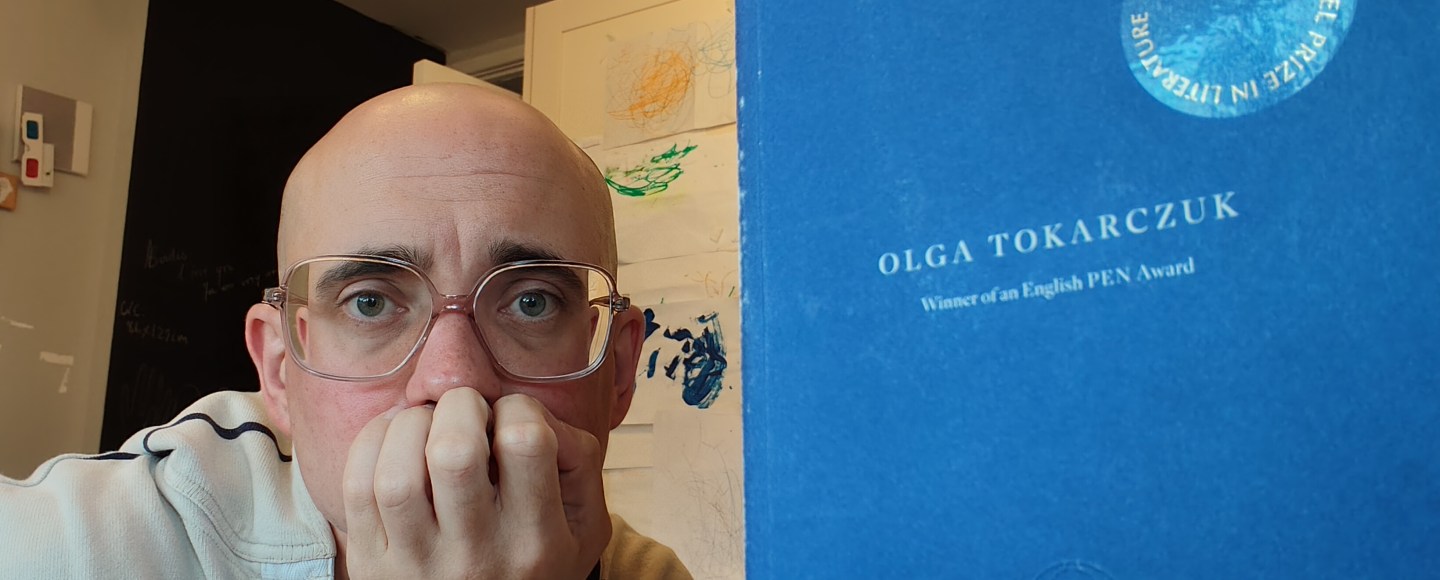

Order THE BOOKS OF JACOB direct from Fitzcarraldo Editions here
Read my thoughts on the first half of this novel here
There’s always a risk, I find, when taking a pause in reading anything that it will be hard to get back into…
The only other time I’ve taken a multi-week break halfway through a giant book was in 2013, when I left my copy of Infinite Jest on a Moroccan coach (see the pleasure of regret or maybe hip-hop-o-crit for more on that, I don’t actually remember which one I wrote about that in1) and resumed with a new copy when back in the UK a month(ish) later. That time, I seamlessly slid back into the narrative, because – contrary to rumour and the implication caused by its size – that particular David Foster Wallace novel isn’t quite as complex or difficult as one might expect. The list of characters isn’t as large as many other books of a similar size, and lots of it revolves around the same people interacting in either slightly different settings or even – one particular scene that recurs throughout the novel – the same encounter documented across hundreds (tens?) of pages of text.
The Books of Jacob, however, is the kind of novel where holding memories of who every character is becomes both an imperative need but also, somehow, superfluous (on the peripheries).
Because there are so many characters here, probably well over a hundred (though maybe not quite that many, but also maybe yes), most of whom appear at least several times during the novel’s long course. Oh, and about half of them change their names, often multiple times, and even though Nobel laureate Olga Tokarczuk is generally very helpful in reminding her reader what the original names were of most characters as they begin to use other names (essentially allowing her characters’ own embracing of new identities to confer how the all-seeing, all-knowing third person narrator refers to them), they do change all the time, changing as the whims and manoeuvres of the cult leader Jacob Frank decides his priorities and plans and allegiances must be reflected by how he addresses his faithful…
Jacob Frank was a very real historical figure, a person who believed he was and/or encouraged others to believe he was a version of a/the Messiah, though as his life went on (at least according to the history of it as fictionalised by Tokarczuk) he increasingly described himself as a mere conduit towards a bigger, better, more female messianic apparition. Though very much in a Lawrentian, a Gravesian, a (in his Graves-inspired poetry and non-novelistic writings) a BS Johnsonian idea of the female godhead, i.e. one you can definitely fuck and then she’ll comfort you afterwards, i.e. not a very feminist-feeling deity. Jacob Frank, though, was much less sexually repressed than those 20th century writers2 as his little messianic cult was very much a sex one, more and more so until the freeing age-related loss of libido put a stop to it.
In the second half of the novel, the cult gets more exploitative of its members, financially, and also sexually, too: as time goes on, this is not just a “free love” type enterprise where everyone is having a good time whenever and however they mutually want to, but sex is used as a form of control, of coercion, and involves incest and child sexual abuse.
Jacob Frank is having sex with anyone within his cult that he wants to, and making them all have sex with each other on his command as and when he wants that, too. A bit like an even more extreme eighteenth century P Diddy, though without the prior chart-topping discography.
But that makes it sound like The Books of Jacob is a prurient text. It isn’t (is TriumphOfTheNow.com?), at all.
In the second half of this massive volume, the novel remains a complex, serious, articulate and deeply literate document depicting a very specific yet wide-ranging set of people at a very particular time, as they move across and around the landmass of Europe hoping for (and often finding, though not always) respite from repressive control.
Various political factions rise and fall, various institutions affiliated with various churches and religions become friendly and then unfriendly and back and forth again… the whiff of magical realism (curses seem to work, in both positive and negative uses) hangs in the background, but movements major and minor of European sociocultural political history play large and loud across the pages of this book.
We see inside the boudoirs of some of the most powerful men of the era, we see inside the words and notebooks of men close to those in power; we see letters and writings sent between those who have less but, perhaps, think more, and the reader also sees lots of illustrations and woodcut images based on (copied from?) artworks made at the time.
As a novel, it’s a collage; of lives large and lives small, of hopes realised and of hopes dashed… of people with too much faith, people with not enough, and of people who exploit the faith of others until the others are left as a dry husk.
It’s about so many important things, really… a novel that discusses the false promise of the Enlightenment, that looks at the boons and the bains of being part of a cult or even a large, organised religion.
It looks at the movements of power on a small and major basis, it looks at desire and it looks at lies. At the past, at the future, at the present…
It’s an important and a serious novel, absolutely worth reading and studying. But with the break, yes, I did very much wish it had had one of those lists of character names and relationships at the start like other big books (Tolstoy, Jolly Cooper) do. But my memory not being enough to remember every character’s name is no reason to fault the book.
It’s glorious, serious, meaningful, fiction.
Worth attention, worth acclaim, worth everything.
–///–
Towards the end, the narrator states:
If human beings had only known how to truly preserve their knowledge of the world, if they had just engraved it into rock, into crystals, into diamond and in so doing, passed it on to their descendants, then perhaps the world would now look altogether otherwise. For what are we to do with such a brittle stuff as paper? What can come of writing books?
Indeed. What can? This can, I suppose. This can.
- Buy them both, actually, why not??? ↩︎
- I mean I know a lot about DH Lawrence and BS Johnson and it’s the prurience and repression that I always jived so much with in both of their works. I don’t know how sexually repressed Robert Graves was, but he spent most of his later life living on Ibiza and his youth having family money, so maybe he was – unlike my three pillars of slightly experimental, lower middle class, bullied, writers out of their depth in the real world of real people (Lawrence, Johnson, manley hadley) – enjoying the pleasures of the flesh with ribald abandon? ↩︎

Thank you so much for reading TriumphoftheNow.com! If you like what you’ve read, please subscribe, share and order one of my books. If you love what you’ve read, why not order me something frivolous and noisy from this Amazon wishlist or make a quick donation via my ko-fi page?
I’m currently focusing on parenting and creative practice, so small donations are appreciated now more than ever!
scott manley hadley aka SOLID BALD live
Here’s a video of me recently performing at the prestigious (it has a Wikipedia page) comedy night, Quantum Leopard. Listen to how much fun the crowd is having. You could have that much fun, too!
Forthcoming gigs include the following – there may/will be others:
15th October: The Bar VXXXII Comedy Club, Colchester
18th October: Brockley
19th October: West End New Old Act of the Year Semi-Final
26th October: Alternative Comedy Jam, Brighton
29th October: The Comedy Centre, Isleworth
21st November: Twinkles Cabaret, London
7th December: Coherent Comedy, Online
13th December: Dr Mew’s Sci-Fi Cabaret, Aces & Eights, Tufnell Park
7th January 2027: I’ve got something in the calendar for this but no details
10th March 2027: Lydford, Devon
Discover more from Triumph Of The Now
Subscribe to get the latest posts sent to your email.


0 comments on “The Books of Jacob by Olga Tokarczuk PART TWO”